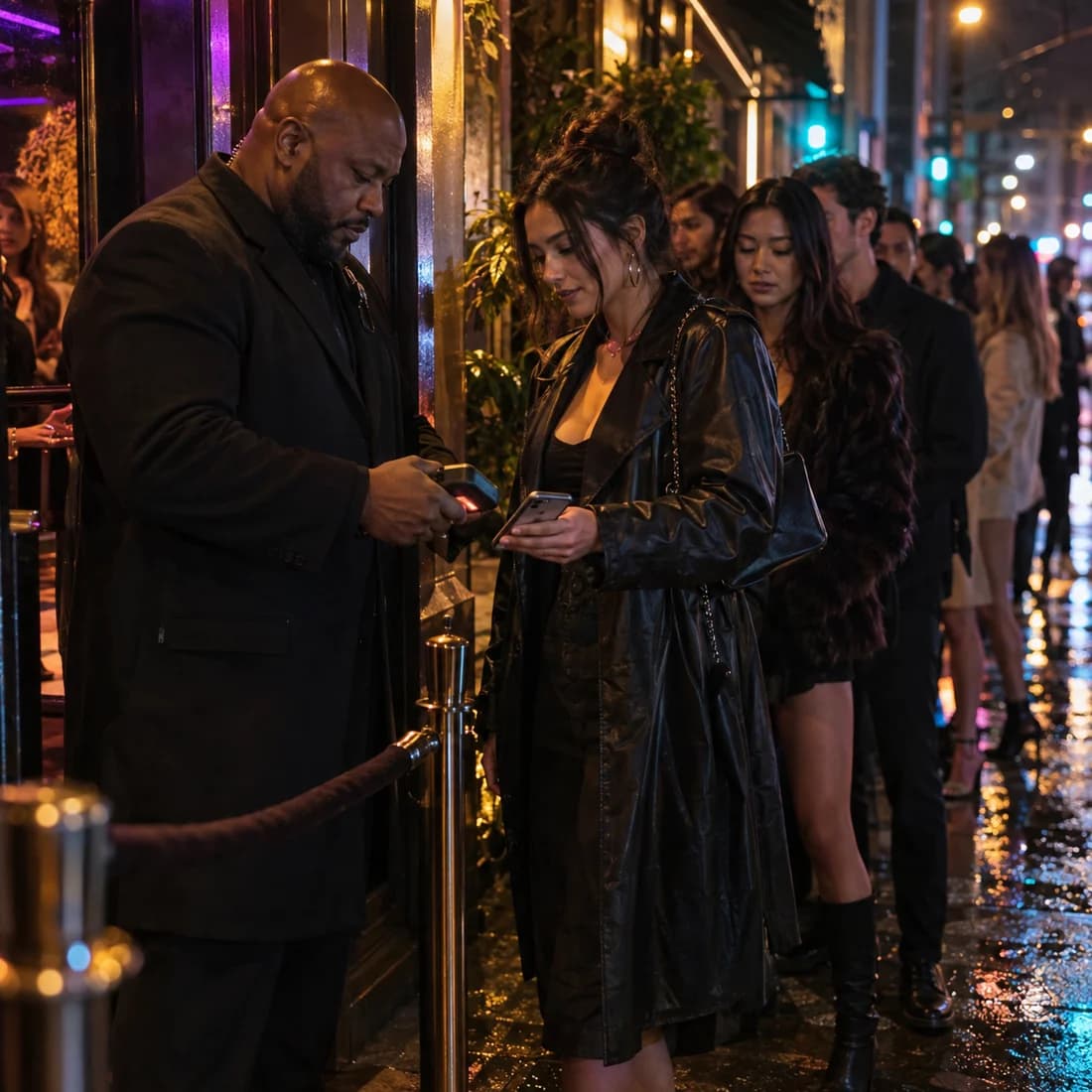
Start from the room and the costs
A ticket price starts with two numbers: what the night costs and how many people the room holds. Add up the artist fees, travel and hotel if there are any, staff, security, marketing, and any ticketing fees you plan to absorb. Then decide how much of that the tickets have to cover, and how much the bar and the tables will carry.
Next, look at what your crowd already pays. Check nights like yours, in rooms like yours, in the same part of town. A price well above the going rate needs a name that justifies it. A price well below it tells people something about the night you didn’t mean to say.
That gives you a range rather than a single number. The rest of this guide is about spreading tickets across that range, so the people who commit first pay least and the night is covered before the doors open. It starts with the cheapest ticket.
Early bird tickets
An early bird ticket is the cheapest advance ticket, sold first and in a limited batch. It rewards the people who commit before the lineup is complete, and it tells you early whether the night is tracking.
Keep the batch small enough to sell out. An early bird that sits unsold for weeks says the opposite of what you want. End it on a date or when a set number sells, say which, and stick to it. If you extend an early bird you announced as ending, your crowd learns to wait.
Offer it to your past buyers before the public announcement. They are the people most likely to buy at once, and a first chance at the best price is a good reason to stay on your list.
If the early bird sells out in hours, don’t add more at that price. Move to the first release, and take it as a sign the later releases can go higher.

Release tiers, and when to raise prices
After the early bird come the releases: a first release, a second, sometimes a final one, then the door. Each step up gives people a reason to buy now. Three or four advance tiers are usually plenty; with more than that, nobody can tell what the price is.
A tier can end on a quantity, on a date, or on whichever comes first. Quantities build momentum when a night is selling. Dates give a slower night fixed moments to post about. Either way, say when the price goes up before it does.
Then raise prices when the plan says. The temptation on a slow night is to hold a cheap tier open, or to drop the price. Both teach your crowd that the price is negotiable. If a night is slow, change the promotion instead: a new name, a new video, a push from the promoters who sell. How to promote an event sets out a calendar built around the releases.
When a night is selling fast, moving to the next release early is fair if you said the tier would end on a quantity. Adding a tier above the one you announced, halfway through, is not. People who planned around your prices will notice.
VIP tickets, tables and add-ons
Above the releases sits VIP. A VIP ticket is a ticket with more in it: a separate entrance, a faster line, a drink, access to an area. Price it on what the door and the bar can actually deliver on a busy night. A VIP line as slow as the main one costs you more goodwill than the ticket made.
VIP tickets and tables are different products. A table is for a group, booked against a deposit and often a minimum spend, and priced on what the group will spend at it. How bottle service works covers table pricing. Keep the two apart, so a VIP ticket never undercuts a table.
Add-ons are the extras: coat check, a drink package, parking. Selling them beside the ticket keeps the ticket price honest and lets guests choose. Under the FTC’s fees rule, optional extras that guests choose to add are one of the few charges that can sit outside the total ticket price.3
Fees, and who pays them
Whatever the tier, every ticketing platform takes something: a per-ticket fee, a percentage, card processing, or all three. The question for you is who pays. If guests pay, the price you set is what you keep, and checkout adds the fees. If you absorb them, the price guests see is the price they pay, and the fees come out of your share.
Eventbrite is a useful example, because it publishes its fees by country. Its buyers pay the fees by default, or you can choose to absorb them. It works out the service fee on the ticket price and the processing fee on the whole order, service fees and tax included.12
| Country | Service fee per ticket | Payment processing | At the door, in its app |
|---|---|---|---|
| United States | 3.7% + $1.79 | 2.9% of the order | $1 per ticket + 2.9% of the order |
| Canada | 3.5% + C$1.29 | 2.9% of the order | C$1 per ticket + 2.9% of the order |
| United Kingdom | 6.95% + £0.59 | Not applicable | £0.50 per ticket + 1.6% per order |
On a $20 ticket in the US, those rates come to about $3.18 before any tax. Across a few hundred tickets that is real money, which is why the choice of who pays matters. Compare platforms on the whole night, tables and the door included; our Eventbrite comparison sets the published fees side by side.12
In the UK, you can’t add a surcharge for paying by consumer debit or credit card. The ban has applied since January 13, 2018.8

Show the full price: the rules in the US, Canada and the UK
Whoever pays the fees, the price a guest first sees has to be a price they can actually pay. The US, Canada and the UK now all have rules that say so.
In the US, the FTC’s Rule on Unfair or Deceptive Fees took effect on May 12, 2025. It covers any business that offers, displays or advertises live-event tickets, which the FTC describes as concerts, sporting events, music, theater and other live performances watched as they happen. The total price, with every mandatory fee you know about and can calculate, has to be shown more prominently than other pricing. Only government charges such as sales tax, shipping, and optional extras guests choose can sit outside it, and those must be disclosed before the guest is asked to pay.3
The rule doesn’t name club nights. A ticketed night with a DJ or a live act is safest treated as covered: put the all-in price on the flyer, the post and the ticket page.
In Canada, the Competition Bureau says advertising a price that can’t be reached because of mandatory fees is against the Competition Act, unless the extra fixed charges are imposed by government, such as sales tax. The Competition Tribunal found that the cinema chain Cineplex had engaged in drip pricing, and on January 21, 2026 the Federal Court of Appeal dismissed its appeal.45
In the UK, the Digital Markets, Competition and Consumers Act 2024 makes the total price, including any fees, taxes and charges a guest will necessarily pay, part of the information an invitation to buy must give. That section has been in force since April 6, 2025, and the CMA’s guidance names drip pricing among the practices the Act deals with. In practice, the advertised price includes VAT and any booking fee.67
This is a summary, not legal advice. If your pricing is unusual, check it with a lawyer where you sell.
Promo codes without giving the night away
Once the full price is set and shown, a promo code is the way to take money off it for someone in particular. Used well, it rewards a group you can point to: a promoter’s crowd, a partner’s customers, staff and their friends, last month’s table guests. Used badly, it becomes the real price, and everyone who paid in full feels foolish.
- Give each code to a group you can name, and only to that group.
- Cap the number of uses, so a leaked code costs you a handful of tickets rather than the night.
- Set a start and an end date, and end it when you said.
- Tie it to the ticket types it is for. A code meant for the first release shouldn’t work on VIP.
- Check what each code sold after the night, and retire the ones that only discounted people who would have paid anyway.
Keep the all-in rule in mind here too. In the US, a discount that isn’t open to everyone shouldn’t be shown as the total price, so advertise the full price and let the code take money off at checkout.3
Door prices, and free entry before a set time
Promo codes pull the price down for a few. The door is where it should be highest. If someone can walk up and pay less than the final release, everyone who bought early was wrong to, and next time they won’t. Post the door price beside the final release, so the cost of waiting is plain.
Door sales carry their own costs. Eventbrite’s Organizer app, for example, lists $1 per paid ticket plus 2.9% of the order at the door in the US, and says the payment processing part can’t be passed on to buyers. Count costs like these in when you set the door price.2
Free entry before a set time is a pricing tool too. It fills the room early, gets the bar going and makes the room look full when the paying crowd arrives. Its cost is the guests who would have paid. Keep the cutoff firm, say it in every post, and ask guests to claim a free ticket in advance, so you can count them, plan the door and invite them again.
Make free entry the same for everyone. Some places treat a price that depends on gender as discrimination. California’s Civil Code, for one, bars a business from charging different prices for similar services because of a person’s gender. If a promotion is aimed at one group, check the law where you are before it goes on a flyer.9