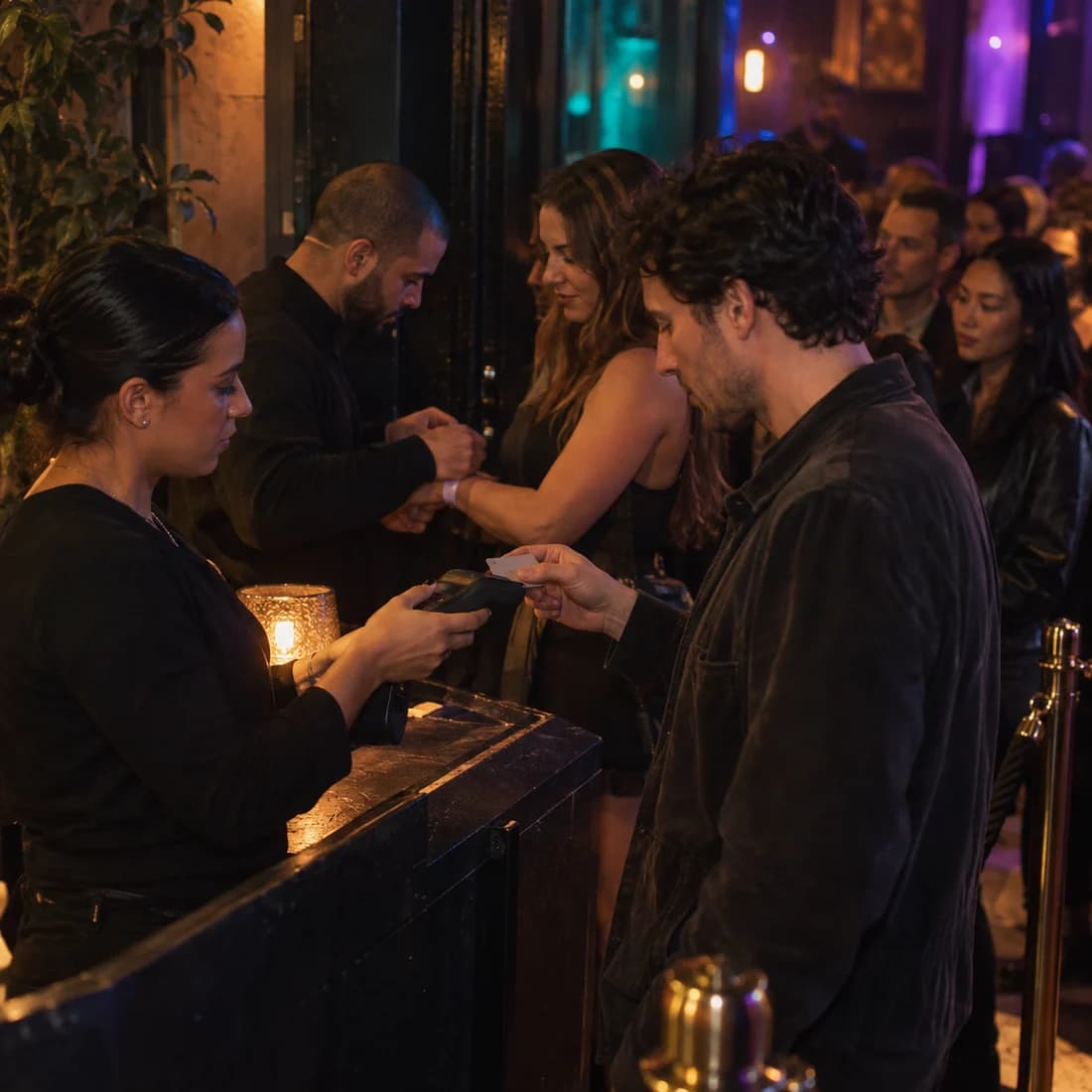
What nightclub security is for.
Security in a club has three jobs. Keep everyone in the room safe. Keep the door calm, so the line, the street and the neighbors stay on your side. And keep a clean record with the people who can close you: the licensing board, the fire marshal, the police and your insurer.
The best door teams work like hosts who are trained for trouble. The door is the first thing a guest meets, and its tone carries into the room. A guest who was greeted, checked quickly and told why the line has paused reaches the bar in a good mood. One who was barked at reaches it looking for an argument.
Local law and the conditions on your license decide the details, so check both before you set the plan.
Hire for temperament. A calm person learns the door policy far faster than a hothead learns to stay calm.
The first decision is who those people are, and who employs them.
In-house team or a security company.
An in-house team works for you, learns the regulars and your door policy, and stays from season to season. A contract company covers a sellout or a sick call and does the hiring, but the faces change and its standards may not be yours. Many clubs keep a head of security and a core team of their own, and add contract guards on the biggest nights.
In the US, security licensing is state law, and an in-house team is often treated differently from a contractor. Four states show the range.
| State | Contract security | Your own door team |
|---|---|---|
| California | Guards hold a security guard registration, the guard card, and work for a licensed private patrol operator or a private security employer. | Unarmed staff employed only by you, whose main job is security, who wear a distinctive security uniform and deal with the public need a proprietary private security officer registration. |
| Texas | Guard companies are licensed under Chapter 1702 of the Occupations Code, which the Department of Public Safety enforces. | Before employing uniformed security staff who deal with the public and guard the premises, your security department notifies DPS and joins its registry. |
| Florida | Anyone working as a security officer needs a Class D license and must own or work for a Class B security agency. | Unarmed staff employed only to work on your own premises are exempt from Chapter 493. |
| New York | The company is licensed by the Department of State, and every guard registers with it. | Covered too. The law counts a business that employs guards for its own use as a security guard company. |
The same laws set the training. A California guard card needs Power to Arrest training before it is issued, 32 more hours of training in the first six months and 8 hours every year. An in-house officer there does 3 hours of Power to Arrest and at least 5 of appropriate use of force before registering. Florida asks for 40 hours of training for a Class D license. New York asks for an 8-hour course before you apply, 16 hours on the job within 90 days and 8 hours a year.1278
With a contractor, settle three things before the first shift: the company’s license and every guard’s, checked with the state; one named supervisor who answers to your head of security; and your door policy, ID rules and ejection steps written into the contract.
In Ontario, security guards are licensed under the Private Security and Investigative Services Act, 2005, and the province’s guidance says that includes bouncers. Guards complete basic training, which includes emergency first aid, and pass a ministry test before they apply. A club that employs its own door staff registers with the Ministry of the Solicitor General; one that only uses a licensed agency doesn’t need to.222123
In the UK, door supervision at licensed premises needs a Security Industry Authority door supervisor licence, whether the venue employs the person or a contractor supplies them. Our SIA licence playbook covers the cost, the checks and what a premises licence asks of the door.24
With the team chosen, the next question is how many of them you need.
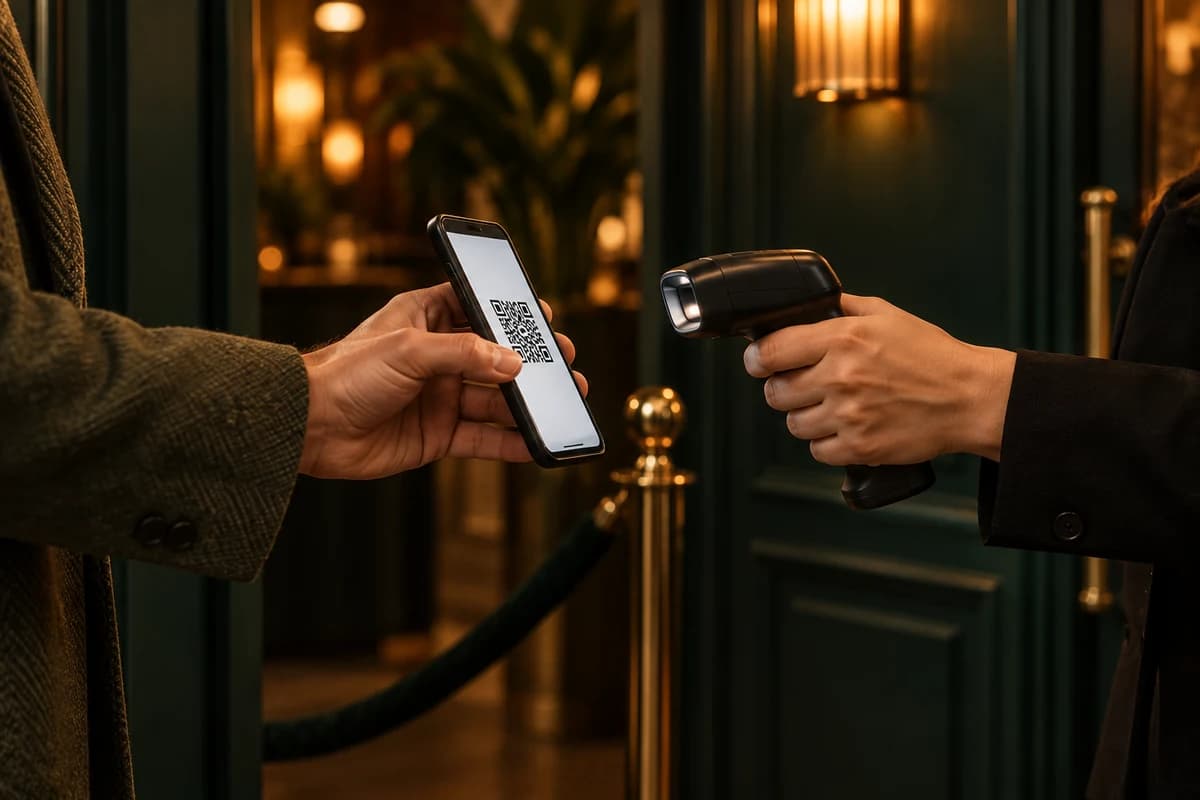
How many security guards a nightclub needs.
There is no national ratio of security guards to guests in the US. There is a patchwork instead: a fire code rule for crowd managers, a city rule here, a police guideline there, and the conditions on individual licenses.
The nearest thing to a national number comes from fire safety. NFPA 101, the Life Safety Code, requires an assembly occupancy to have at least one trained crowd manager, and where the occupant load is over 250, one for every 250 occupants in most facilities. Trained door staff can fill the role, but the rule is about getting a room out safely. It says nothing about how many guards a busy door needs.11
| Source | What it says | Is it a rule? |
|---|---|---|
| NFPA 101, Life Safety Code | At least one trained crowd manager. Over 250 occupants, one for every 250, in most facilities. | Yes, where your fire code uses NFPA 101. |
| Miami Beach Fire Department | At least one trained crowd manager in each nightclub at all times of operation, and one for every 250 occupants over 250. | Yes, in the city’s nightclub guidelines. |
| NYPD and NYC Hospitality Alliance | One security guard for every 75 patrons as a general guideline, more when the event or crowd calls for it, and one supervisor for every five guards. | No. A best-practice guide that says it is not a list of laws. |
| California ABC | Conditions on a license can require security. | Yes, on that license. |
So read your own paperwork first: the license and its conditions, your city’s nightlife rules and what the fire marshal expects. Then build the number from the room itself.
- CapacityStaff for what the room is allowed to hold, not for tonight’s presales.
- Fixed postsEvery entrance, every exit guests can reach, the stairs and the restrooms come before anyone walks the floor.
- LayoutA mezzanine, a patio or a smoking area each needs its own eyes, and corners need more people than long sightlines.
- The night’s riskA sold-out headliner, a holiday weekend or a promoter’s first night with you all call for more.
- BreaksA post that can’t be left empty needs relief built into the count.
Put it on a staffing sheet for each kind of night, with every post named. It is also what you show a licensing board or an insurer who asks how you run the room.
Debating one more guard for a big night? Add them. On a quiet night, a spare guard costs a wage.
Every one of those posts depends on knowing how many people are inside.
Capacity and the count.
Your capacity isn’t yours to choose. The occupant load is set when the building is approved, and the posted number is the one inspectors hold you to. Miami Beach’s fire department sets its figure from the furniture layout and the exit capacity, and approves any new layout. Fairfax County’s fire marshal checks that a nightclub posts the sign near the main entry and keeps its count at the patron entrance.1314
The reason is the worst night this business has had: the Station nightclub fire in West Warwick, Rhode Island, killed 100 people in 2003. Exits are sized for the posted number, not for a crowd over it.12
So the count runs all night, both ways. Miami Beach asks for someone at every door counting people in and out, with staff and performers added before opening, and for the door to be held at the limit until enough people leave. Its inspectors check while clubs are open, and overcrowding earns the owner a citation with a $200 or $500 fine.13
- Start at zero before doors, then add the staff, the DJ and any performers.
- Count in and out at every door guests use, into one total for the building.
- Count re-entry both ways. Smoking areas are where counts drift.
- At the number, it is one out, one in. Tell the line why it has paused.
- After close, set the count against tickets scanned while the night is fresh.
The count is the door team’s job. So is everything else that happens before a guest is inside.
The door: IDs, the dress code and the line.
Check every ID properly, every time. California’s Department of Alcoholic Beverage Control teaches four steps: feel the card’s thickness and edges, look at the photo, the date of birth and for tampering, ask questions the real owner answers without thinking, then give back an ID that passes, or refuse the sale. Acceptable ID there is issued by a US government agency, is current, and shows the name, date of birth, photo and a physical description. You are never required to serve anyone, it adds.16
California also lets staff keep a false ID, as long as they give a receipt and hand it to the local police or sheriff within 24 hours. Learn your own state’s rule before your team starts keeping cards.16
The NYPD’s best-practice guide for New York nightlife says to check everyone who reasonably appears under 25, with no exception for guests of an employee or a promoter, and nobody walked around the check. Put that in every promoter deal; the club promoters playbook covers the rest.10
A dress code works when it is written down, posted before the queue and applied the same way to everyone. The NYPD guide asks for every club policy to be enforced uniformly. Let a promoter’s friend in wearing sneakers, turn away a stranger in the same shoes, and the policy becomes hard to defend. Refuse briefly and politely, give the policy as the reason, and don’t debate it at the rope. The line behind is watching.10
Keep the line orderly and clear of the sidewalk. The guide suggests telling the line that anyone disorderly won’t be admitted, and keeping one search policy, from no searches to everyone, followed every time.10
Put a host beside security at the door. Security decides who comes in; the host makes them feel welcome.
Once guests are through, the job moves inside.

Inside the room: posts, radios and trouble.
The NYPD guide recommends spreading guards through the venue as well as at the door, dressed so guests and first responders can pick them out. Give every post a name and a person.10
- DoorID, the count, the dress code and the line.
- FloorWalks the room and spots trouble early.
- BarsWatches for over-served guests and backs up a bartender who refuses a drink.
- TablesKeeps each section for the guests who paid for it, and watches bottles and sparklers cross the crowd.
- Exits and restroomsFire exits clear, and shut to anyone slipping in. Restrooms checked often.
- OutsideThe street, the smokers and the line, and later the guests heading home.
Run the team on radios with earpieces, so a call from the bar reaches everyone over the music. One head of security places the posts, takes the calls and decides when to call the police. The NYPD guide suggests a supervisor for every five guards.10
Most trouble ends with words. Approach in pairs, speak calmly, give the guest a way out that saves face, and move the conversation somewhere quieter. The NYPD guide recommends training guards in de-escalation.10
When words fail, force is limited to what your state’s law allows. California trains in-house officers in the power to arrest and the appropriate use of force before they register, and the NYPD guide asks for violent guests to be removed by lawful means only. Write your policy with a lawyer who knows your state.210
Eject the same way every time: two staff, the reason given once, out by a route away from the line and past a camera, with the head of security told. Then write it up.
Medical calls come first. Call 911 for an emergency such as a suspected overdose, as the NYPD guide says, and send someone to meet the ambulance. Since 2023 the FDA has approved naloxone nasal spray, which reverses an opioid overdose, for sale without a prescription. Keep it with the first aid kit.1020
Call 911 to report a crime. The guide also suggests keeping the local precinct’s number to hand, protecting a crime scene rather than cleaning it, and saving the video.10
All of it runs to a rhythm, the same one every night.
The shape of a night.
Most nights follow the same arc. Brief the team on it before doors.
- BriefingThe event, the capacity, who has which post, the guest list rules, anyone banned, the radio channels and where the first aid kit is.
- DoorsThe count starts with staff in it. IDs, the dress code and the search policy apply from the first guest.
- PeakThe count nears the number. Hold the door, rotate posts and keep the floor team moving.
- Last callMore eyes on the bars, when guests chase one more drink and tempers run short.
- CloseLights up and a staged exit, so the room doesn’t hit the street all at once.
- Walk-outSweep every room and restroom, lock up, write the reports and talk the night through.
Close is the part clubs underestimate. The NYPD guide suggests offering a vulnerable guest a cab, not letting someone intoxicated into a for-hire car alone, and noting the details when a guest leaves with someone who seems wrong.10
Then comes the paperwork, the part that protects you longest.
Incident reports, CCTV and the paper trail.
Write every incident up the same night, while the people involved are still on shift: ejections, fights, injuries, fake IDs, medical calls and police visits. A report written days later from memory is weaker.
The NYPD guide asks for a full report on any criminal incident, kept for three years, and for a manager who was on the premises to write up a serious assault, kept at least for New York’s three-year limit on negligence lawsuits.10
- The date, the time and exactly where in the venue.
- Who was involved and who saw it, with contact details.
- What staff did, in order.
- Whether police or an ambulance came, and any reference number.
- Which cameras covered it, and that the footage was saved.
- Who wrote the report.
The guide recommends cameras inside and outside the front, at every entry door and outside the restrooms, with someone on each shift who can work the system. It suggests keeping footage of the front for at least 30 days and saving video of anything unlawful for the police. A retention period set by your license or city comes first.10
Keep training records too: each guard’s license and its expiry, their certificates and every refresher. After a claim, the report, the footage and the training file are what your insurer and your lawyer will want. Our nightclub insurance playbook covers the policies behind them.
Save the footage before you need it. Most systems record over themselves, and a claim can arrive long after the night.
The file is only as good as the training behind it.
Training the security team.
State guard training covers the legal basics. Add the rest for your own room.
- Responsible beverage serviceCalifornia requires every on-premises server and manager to be certified within 60 days of starting. Texas doesn’t require it, but certifying sellers and their managers within 30 days of hire, among other standards, protects a business from TABC action. Door staff gain from the same lessons on minors and over-serving.
- Crowd managementMaryland’s state fire marshal runs a two-hour online crowd manager course with the National Association of State Fire Marshals, valid for two years.
- De-escalationRehearse scenes from your own room: the refused guest, the drinker who has been cut off, the argument at the bar.
- First aidOntario builds emergency first aid into its basic guard training. Have first aid and CPR-trained staff on every shift.
- Your own policiesThe door policy, ID rules, ejections, the emergency plan and reports, taught to every new hire and refreshed.
Still building the room? How to open a nightclub puts hiring your head of security in order with the rest of the team, and how to get a liquor license covers the license your security plan has to satisfy. To see how VenueStack works at a club’s door, see nightclubs.