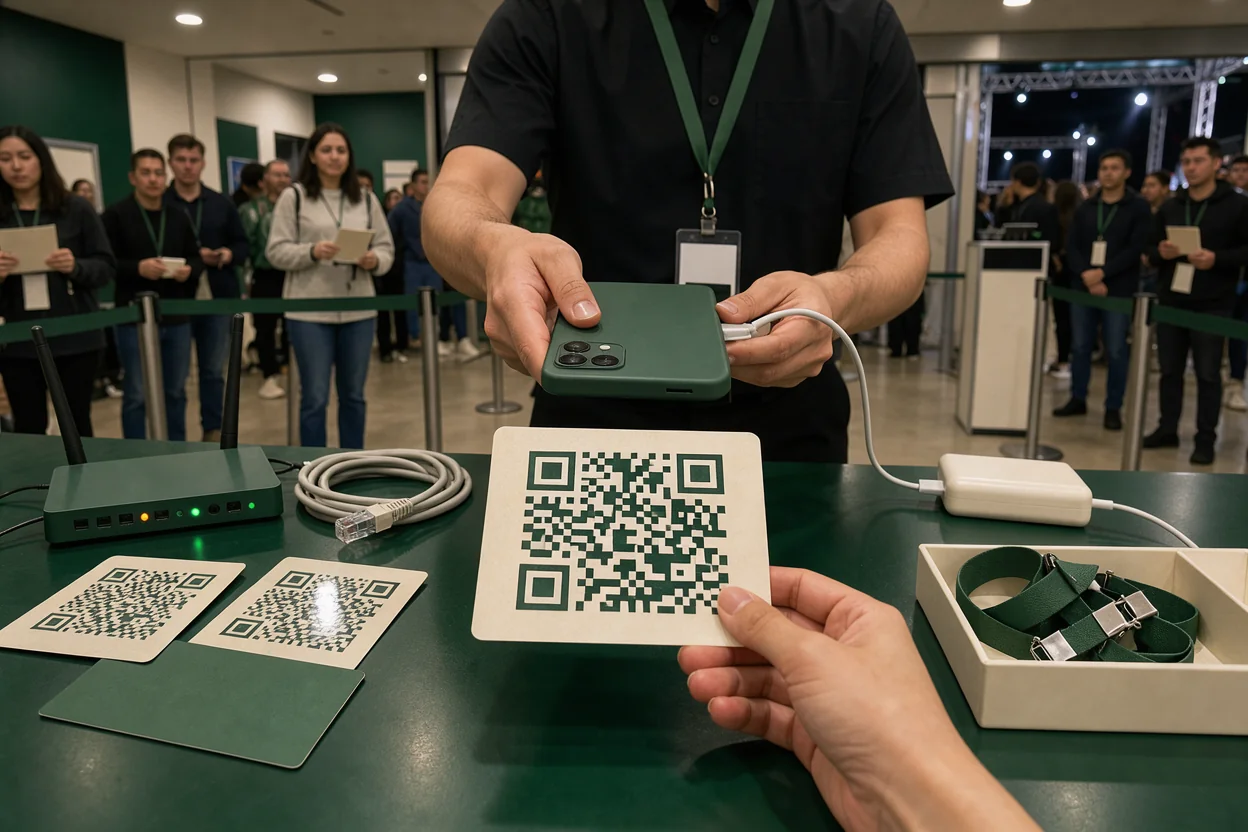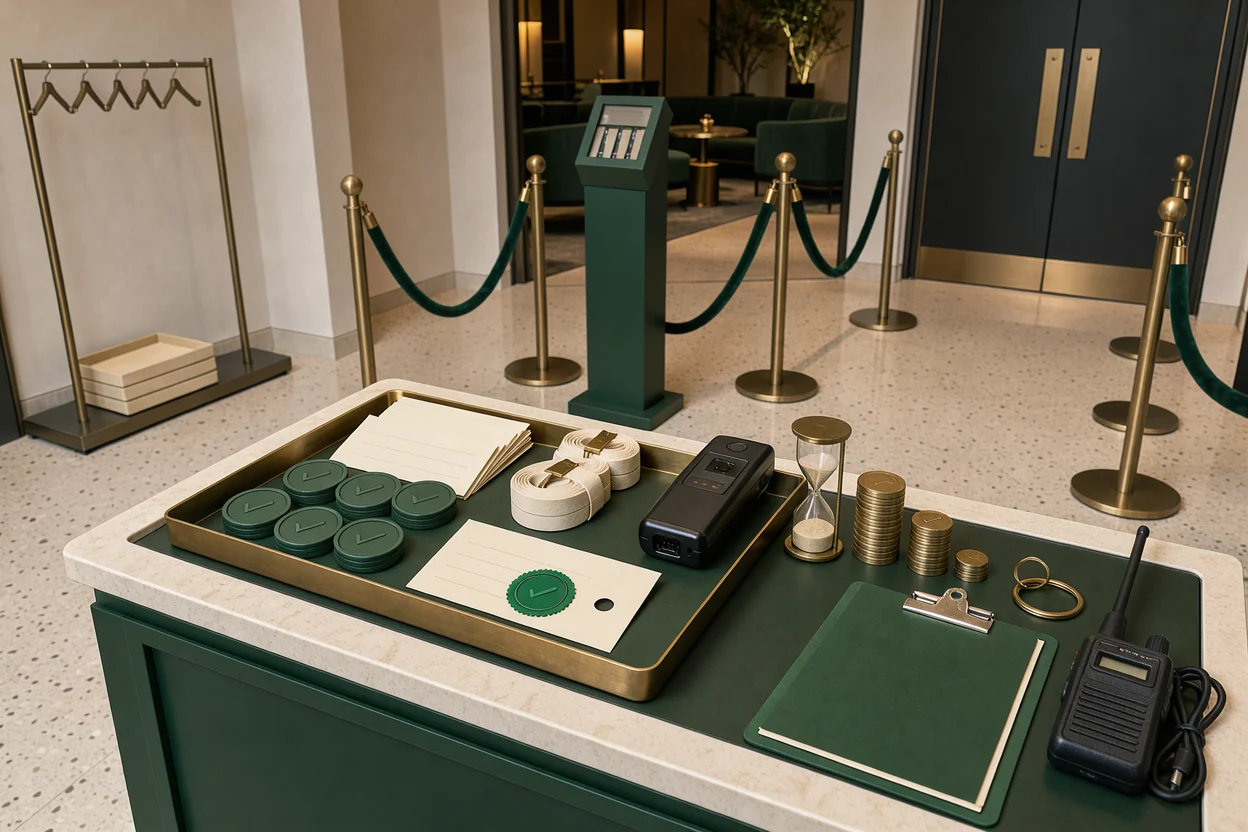
A guest-list guide published by 1021 Events on July 14, 2026, identifies attendance changes close to event day as an operating concern. For nightclub owners, lounge managers, and event teams, guest list management best practices now need to account for that uncertainty. The publication describes late attendance changes, although it does not establish a nationwide shift in nightclub booking times. The practical question is where to adjust: confirmation timing, list deadlines, or the space available to walk-ins.
The distinction matters this quarter. A quieter advance list can mean weaker demand, later decisions, or a different mix of paid bookings and informal expressions of interest. Each explanation calls for a different response. Extending every deadline without checking which pattern applies could leave staff holding space for guests whose plans remain unsettled.
The 2026 evidence points to more flexible lists
Guest-list guidance published during 2026 puts greater emphasis on records that can absorb changes near an event. That is the clearest development supported by the available publications.
Published guidance emphasizes changing attendance
In its May 16, 2026, guide, PlanSeats describes the value of live guest records when hosts, planners, and front-of-house staff need the same answer. It discusses party-level responses, duplicate control, and flexible seating arrangements.
Cam-Events AI’s May 5 playbook treats walk-ins, plus-ones, and last-minute declines as normal operating exceptions. Its guidance on handling last-minute exceptions calls for a status, an owner, a due time, and a resolution note.
These are vendor-authored practice guides. They document recommended responses to changing attendance, but they do not measure booking lead times across US nightlife venues. The July publication adds another example of that emphasis; its date alone does not establish the size of a behavioral shift.
Spending pressure remains an explanation to examine
Consider a hypothetical group comparing admission costs, a table minimum, and everyone’s available budget. The organizer may wait until the group agrees before making a commitment.
That scenario is plausible. The cited guest-management publications do not establish spending pressure as the cause of later bookings.
Operators can investigate the connection through their own inquiries and booking records. Repeated questions about total cost, deposit timing, or party size may help explain hesitation. Those signals should remain separate from completed reservations.
As of October 14, 2026, the defensible operating response is to examine local booking patterns before rewriting policies. Compare booking timestamps with attendance, payment status, and party size for similar events.
Analysis: Later decisions call for different confirmations
For venues whose records show shorter booking windows, confirmation messages need to fit the time remaining before arrival. A reminder schedule built around advance reservations can become awkward when someone books shortly before opening.
A recent booking needs a different message
A guest who booked days ago may need to reconfirm plans. Someone who booked an hour ago needs accurate arrival information and a clear explanation of the booking conditions.
Sending both guests the same sequence can create unnecessary work. A fresh reservation followed immediately by a request to confirm again may leave the organizer unsure whether the original booking succeeded.
The first response should state what the venue has accepted: the party size, arrival window, payment position, and any conditions attached to the booking. Later messages should address information that remains unresolved.
For tables, that might be the final headcount or an unanswered arrival question. Existing table no-show policies should also be reviewed for deadlines that have already passed when a late reservation arrives.
Keep a record of whether the guest responded. A delivered message and an affirmative response represent different levels of commitment.
Cost and arrival terms belong together
If guests are still deciding what they can spend, incomplete price information can prolong the decision. Confirmation should put the agreed financial terms beside the arrival conditions.
Depending on the booking, that may include the deposit already collected, the remaining balance, a stated minimum spend, or the admission benefit attached to a list place. Use only the terms that apply.
Do not make the organizer assemble those details from separate messages. A party should be able to understand its commitment from the current booking record.
VenueStack’s guest chat can keep those conversations alongside the operating workflow. The purpose of guest messaging is to resolve a specific uncertainty before staff must make an allocation decision.
Set the response deadline according to the decision it supports. A request to confirm table size needs enough time for the team to act on the answer.
Analysis: List cutoffs need separate clocks
Later booking decisions create pressure to keep lists open longer. The better adjustment depends on which deadline is causing friction: joining the list, changing a party, or arriving for a stated benefit.
Joining and arriving are different deadlines
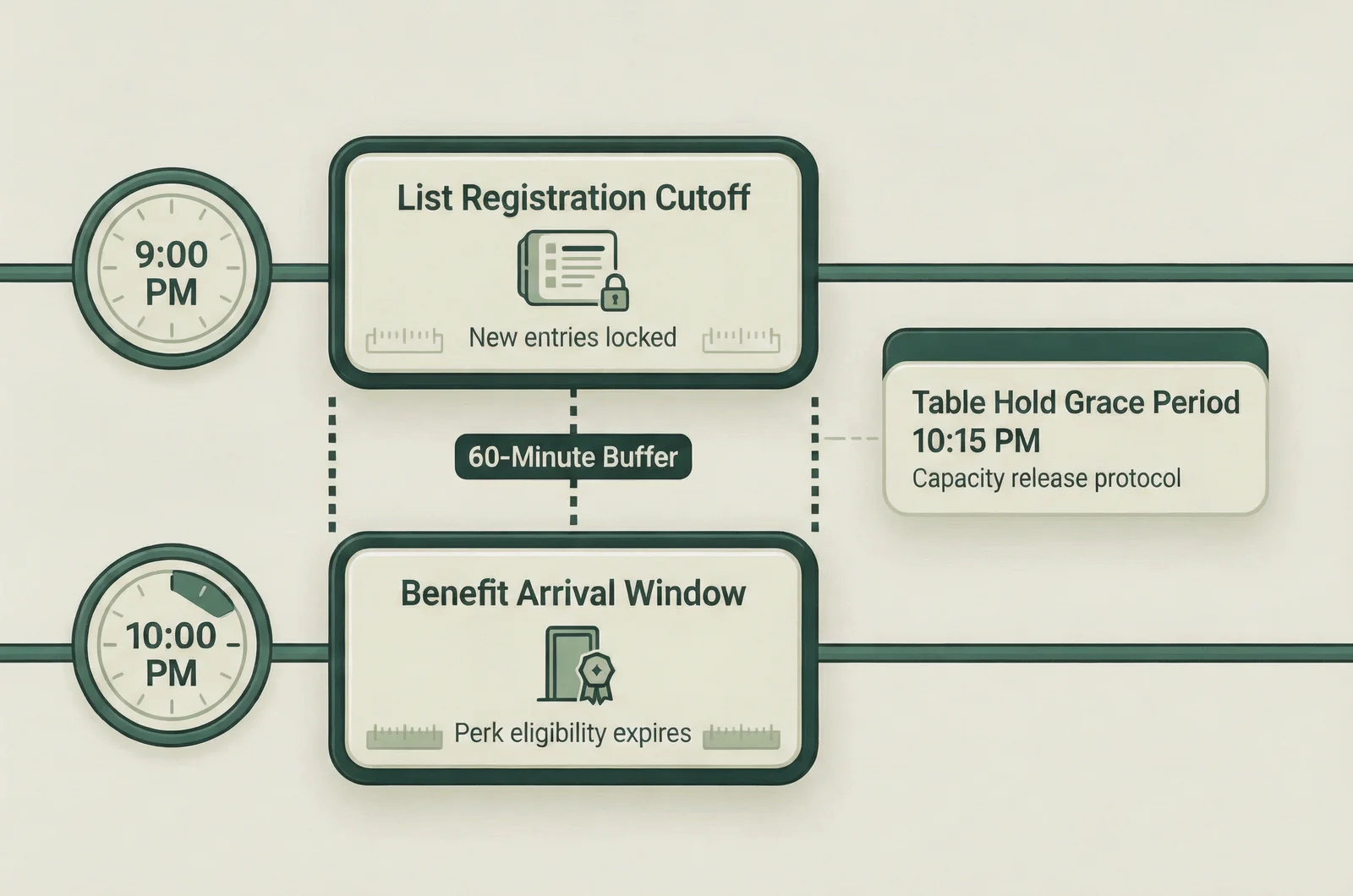
A list can accept names until one time while requiring arrival by another. A table can have its own hold period. These conditions should be stated separately.
Combining them into one vague “list closes” message leaves room for disagreement. Guests may interpret it as the deadline to register, while staff interpret it as the deadline to arrive.
Consider a hypothetical venue that accepts registrations until 9 p.m. and gives list guests an admission benefit before 10 p.m. A guest who joins at 8:55 p.m. needs both times in the confirmation. The registration deadline does not explain the arrival condition.
Any change to those times should reach the booking page and staff instructions together. A message sent only to promoters can leave guests relying on older information.
For online reservations, website booking cutoffs should reflect the time when the team can still process a new booking accurately.
Late changes need an approval boundary
Keeping registration open longer also extends the period during which staff may receive party changes. Decide which changes can be accepted directly and which need a manager’s approval.
A spelling correction has a different consequence from adding people to a table booking. Moving an arrival time may affect a hold. Adding a plus-one may affect the admission count.
The boundary should follow the resource affected. Staff can then resolve a change without reopening the entire booking conversation.
A practical quarter-end review should ask whether the current cutoff prevents useful bookings or protects a real operating deadline. If the team cannot identify that deadline, examine why the cutoff exists.
Document the new rule with an effective date and apply it to the relevant events.
Analysis: Walk-in space should follow local arrivals
A later booking pattern can change how much space a venue holds for advance guests. It does not produce a universal reservation-to-walk-in ratio.
The list count is not the attendance forecast
Start by separating named guests, accepted reservations, paid bookings, and people already inside. Those categories answer different questions.
A list containing expressions of interest cannot be treated the same way as a set of paid admissions. Table guests may also appear elsewhere in the guest records. Count people once when estimating attendance.
The relationship between tickets and table bookings matters here. A table allocation reserves a specific resource, while general admission uses a different part of the venue’s operating plan.
For forecasting, compare arrival rates within each booking category. Keep the admission count grounded in actual check-ins and known departures where the venue tracks them.
A forecast helps staff plan. It does not change the venue’s operating limit.
Event format changes the allocation decision
A lounge holding a particular table faces a different decision from a ticketed event accepting general admission. A beach club may also have bookings tied to specific daytime arrival windows.
Those differences affect what can be released and when. A late table party may leave a usable table idle. An unconfirmed guest-list place may represent no promise to hold a physical space.
Release rules should therefore identify the booking category, the guest’s stated arrival conditions, and the staff member authorized to act.
Avoid applying one event’s walk-in share across the calendar. Compare similar nights before changing allocations, and keep ticket commitments visible when assessing remaining space.
The relevant measure is whether the venue consistently turns away usable demand while holding resources that go unused. Record when a hold was released and whether anyone took that space.
Late changes make shared records more important
When decisions arrive close to opening, guest-list accuracy depends on where updates are recorded and who acts on them. A longer registration window increases the value of a current record.
Every exception needs someone responsible
Cam-Events AI’s recommendation to assign an owner to an exception has a practical implication for venue teams: the person receiving a request should know who can resolve it.
A promoter’s message about extra guests can remain pending until the responsible manager accepts or declines the change. Until then, the operating record should show the unresolved request.
The same applies to an arrival change that affects a table hold. Staff need the decision, its time, and the person who approved it.
Keep notes specific enough to support the next action. “Guest called” is less useful than a record of the revised party size and agreed arrival window.
Connected bookings make the consequences visible
VenueStack brings guest lists, ticketing, table bookings, deposits, and check-in into one system. A venue management platform can help staff see the resources and payments attached to a change.
That connection supports coordination; the team still needs explicit rules about who can accept the change.
Guest records should contain information staff can use during the event. A current party size, booking status, and arrival note can support a decision. An unexplained label may create another question.
For this quarter’s review, identify the changes that staff currently resolve outside the main record. Move the accepted outcome back into that record before the booking reaches the door.
October’s booking data will decide what changes stick
The next useful evidence for an operator is a comparison of similar events before and after a timing adjustment. Total list growth alone cannot show whether the change improved attendance or resource use.
Measure when commitment becomes attendance
Track the interval between booking and the event’s start. Then connect it to the booking category, party size, and eventual attendance.
Snapshots taken at consistent points can reveal when the list develops. For example, compare the position 24 hours before opening, six hours before opening, and at opening. Those intervals are suggested observation points, not industry benchmarks.
Use the same definitions each time. A “confirmed” booking should mean the same thing across the events being compared.
The review can answer several distinct questions:
- What share of bookings arrived during the final observation window?
- How many confirmed people attended?
- How often did the final party size differ from the accepted booking?
- How much held table space was released and subsequently used?
Record headcount alongside booking count. One group reservation can represent several people, and changes in group size can affect the result.
Test a narrow change before expanding it
Change one policy at a time where practical. A revised reminder schedule is easier to assess when cutoff times and admission conditions remain consistent.
Event differences still need context. A different performer, ticket price, weather condition, or private booking can affect demand. Note those circumstances instead of attributing every movement to the new policy.
A useful interactive booking-window estimator could let operators enter bookings and headcount at each snapshot, then add final attendance. It could calculate the share added late and the confirmed-to-attended rate. It should display the operator’s inputs without prescribing a fixed walk-in ratio.
Judge the adjustment against the problem it was meant to solve. If a later cutoff was intended to accept more viable bookings, count how many of those late bookings attended.
What venues should promise late-booking guests
As booking windows shorten, the guest-facing promise needs to remain understandable. Three questions deserve explicit answers in the current event’s terms.
Does joining the list guarantee admission?
State what the list place means for that event. It may establish eligibility for an admission benefit, record interest, or carry a specific admission commitment.
The confirmation should explain any arrival condition and whether entry remains subject to availability. Use the same wording in the booking page and staff briefing.
Can a guest change the party size after confirming?
Explain which changes can be requested and when they become accepted. The request itself should not silently change the booking.
For a table, confirm the approved headcount and any effect on the agreed terms before the group arrives.
What happens when the arrival window passes?
Publish the applicable hold or benefit condition before the guest commits. Staff should be able to locate that condition in the current booking.
The question for the remainder of 2026 is how each venue’s later bookings turn into actual arrivals. Keep revised policies tied to those results, and date each change so the next review has a clear comparison point.