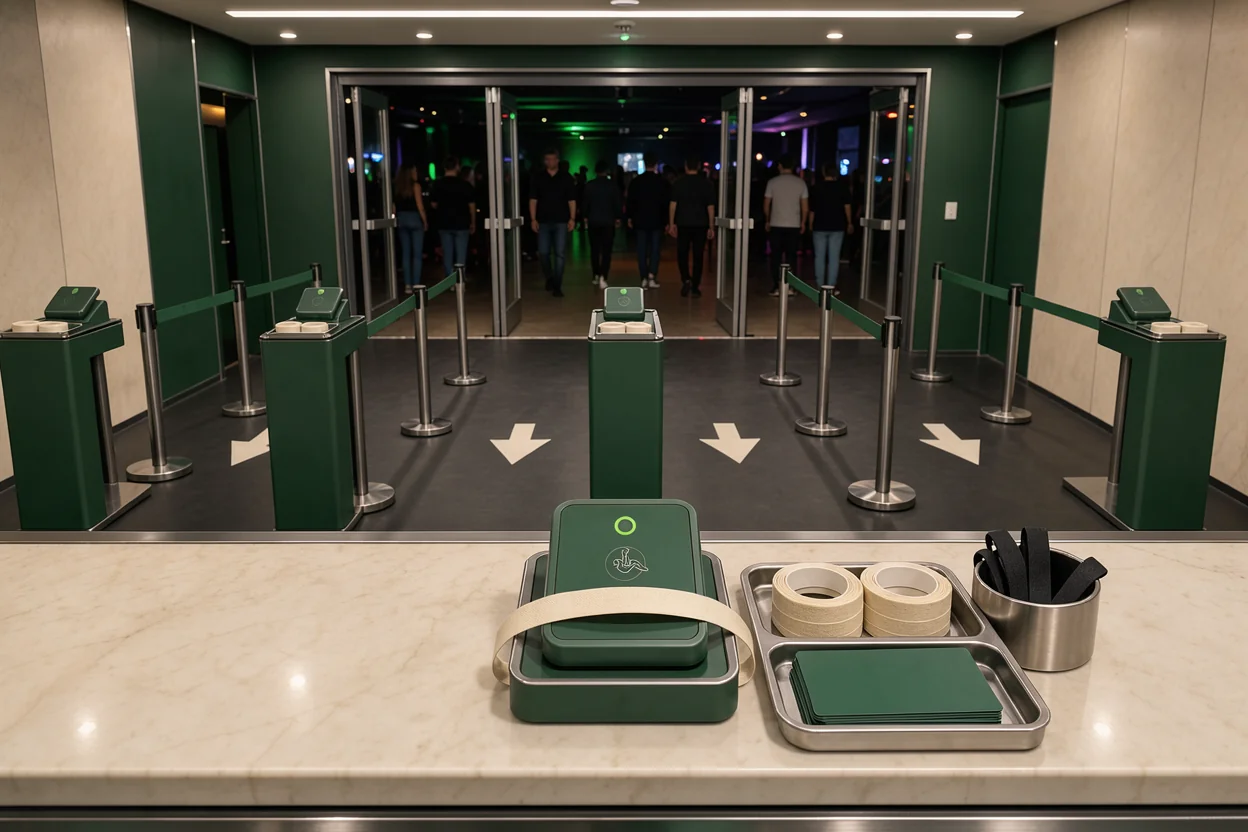
Deposit chargeback prevention for events starts with a booking the guest understands and a payment your team can explain. A disputed table deposit can leave a nightclub, lounge, or beach club chasing confirmation emails while the next event is already selling. These nine practices help remove that ambiguity and build records you can use if a dispute arrives.
The ranking puts clear terms and recorded agreement first because they shape every deposit booking. Payment controls, guest communication, and evidence follow. This is an operational priority order, rather than a measured ranking of chargeback reductions. Start with the highest entry your venue cannot consistently carry out.
1. Spell out what the deposit reserves and when it is refundable
An unclear deposit creates room for disagreement before the guest reaches your door. This ranks first for venues whose cancellation policy is a short nonrefundable line in an email.
Explain what the payment reserves: a specific table, admission package, private area, or event date. State whether it reduces the final bill, and separate it from any minimum spend. Then define cancellation deadlines, no-shows, rescheduling, late arrival, and venue cancellation. Use dates, times, and the venue’s time zone wherever a deadline matters.
For a hypothetical lounge booking, a $200 deposit toward a $1,200 table minimum should be described as a credit against that minimum. The guest should understand that $1,000 remains before any separately disclosed charges. A refundable security amount would need different wording.
Keep those terms beside the payment action and consistent with your event table rules.
The limitation is legal enforceability: clearer writing alone cannot establish whether every clause is valid for your business and jurisdiction. Obtain qualified review where needed.
Previously, staff explained what nonrefundable meant after a complaint. With this change, guests see the conditions before paying. Make this the first fix whenever the booking page leaves those conditions open to interpretation.
2. Record acceptance before charging the card
Deposit disputes are harder to explain when your team cannot show which terms the guest accepted. Recorded agreement ranks second because even a well-written policy needs a clear place in the booking flow.

For routine reservations, use an affirmative acceptance step beside the relevant terms. For private events or negotiated packages, arrange signature before payment. Keep the accepted policy version, booking reference, acceptance time, and associated customer record together.
A payment receipt and a signed agreement answer different questions. The receipt records the transaction; the agreement records the booking conditions. Your records should connect them.
This is especially useful when promoters, reservation managers, and finance staff all handle parts of one booking. Give phone bookings the same acceptance process rather than letting staff substitute a verbal promise.
Review your reservation widget requirements for places where terms might disappear between the booking page and checkout.
Acceptance has limits. It does not settle every complaint or prove that the person accepting terms was authorized to use the card.
The operational change is specific: move from a confirmation email sent after payment to a saved acceptance record created beforehand. Prioritize this whenever your team relies on staff memory to reconstruct what was agreed.
3. Match the payment method and timing to the booking
A deposit charge, an authorization hold, and permission to charge a saved payment method create different guest expectations. Choose the arrangement that matches what you are collecting.
A booking deposit takes payment toward the reservation. An authorization hold reserves an amount for possible capture. A saved payment method needs clearly agreed conditions for any later charge.
PayRequest’s April 2026 guide to deposit holds covers holds, capture, and fees. Confirm the timing and processing details with your own payment provider before designing a venue workflow around a hold.
This practice fits venues accepting bookings well ahead of the event, especially when the deposit and final balance are separate. Write down when each payment becomes due and send notice before any agreed later collection.
Use consistent reservation deposit requests so the amount and booking reference stay connected. Avoid ad hoc amounts chosen by whichever employee answers the phone.
The limitation is provider support. A workflow that suits one payment setup may be unavailable or unsuitable in another.
Previously, a guest might receive an unexplained charge weeks after booking. Afterward, each collection has an agreed purpose, amount, and schedule. Resolve those details before saving a payment method or collecting a second installment.
4. Give the payer a secure, traceable payment path
A clear cancellation policy cannot answer every concern about who authorized the payment. This entry moves higher in priority when reservations frequently involve assistants, promoters, or someone paying for another guest.
Send the payer through your payment provider’s checkout or payment link. Ask the provider which verification and cardholder authentication options suit your bookings, then configure those controls consistently.
Keep the payer’s identity distinct from the attending guest’s identity. A company organizer may pay for a group, while a friend may reserve a birthday table. Record that relationship instead of assuming different names establish fraud.
If a payment needs review, assign someone to resolve it before the reservation is treated as confirmed. Staff should know where to see the outcome and when to escalate uncertainty.
This is best for venues with remote bookings and several handoffs between sales and operations. Its limitation is that payment verification does not resolve arguments about refunds or the experience delivered.
The practical verdict is to strengthen authorization alongside the policy work. Replace payment details scattered through messages with a provider-managed transaction tied to the booking. Keep full card numbers and security codes out of staff notes, email threads, and guest records.
5. Send a receipt that connects the charge to the event
A deposit can be correctly collected and still confuse a guest reviewing their statement. A useful receipt connects the payment, venue, and reservation without requiring a call.
Include the event date, booking reference, amount collected, what it covers, and any remaining balance. Make the distinction between admission, a table reservation, and a spending credit visible. State how the guest can reach the reservations team.
Confirm the actual statement descriptor with your payment provider. If it differs from the venue name guests recognize, explain that difference accurately in the confirmation. Do not guess what will appear on the card statement.
This practice fits venues selling tickets and tables for the same night, particularly when a guest makes separate purchases. Send a confirmation for each transaction and show how the bookings relate where appropriate.
The limitation is delivery. An accurate receipt does little if it goes to the wrong address or cannot be found later. Give staff a way to resend it.
Before this change, finance sees a payment while the guest remembers only a conversation with a promoter. Afterward, both can identify the same reservation. Verify receipt delivery before treating the booking as fully documented.
6. Make reminders and cancellation conversations specific
A guest who understands the cancellation deadline has a clearer route to resolving a booking problem with your team. Put reminders ahead of the deadline while there is still time to act.
This ranks especially well for high-demand nights when a released table could return to inventory. Include the reservation date, arrival requirements, cancellation deadline, and the available method for making a change.
Give staff a short explanation they can deliver consistently. For rehearsal, the conversation can follow this sequence:
- Explain what the deposit reserves and how it applies to the bill.
- State the cancellation deadline using the actual date and time.
- Describe what happens after that deadline.
- Explain how the guest can request a change.
Use the same facts in messages and phone conversations. Staff should have permission to escalate an exception without inventing a different policy.
The limitation is service consistency. Automated reminders cannot resolve a guest’s request if nobody owns the reply. Assign coverage and make the contact route easy to find.
Previously, the awkward conversation happened when a guest wanted their money back. Afterward, staff explain the conditions during booking and repeat the deadline before it passes. Favor this practice when complaints frequently begin with a guest saying they did not know how to cancel.
7. Resolve valid complaints and record refunds cleanly
A deposit policy needs an operational route for mistakes, changed plans, and failures to deliver the agreed booking. Review the facts before deciding whether to retain the payment.
This is the strongest fit for venues where guest requests sit between reservations, managers, and finance. Assign a decision owner and a response target that your team can meet. Review what was promised, what changed, and what the accepted terms say.
If the venue cancels or materially changes the booking, explain the change promptly and state the proposed payment resolution. Avoid applying a guest-cancellation response to a problem created by the venue.
Keep table and ticket transactions distinct. Your team may need separate table booking refund workflows and ticket order refund procedures, even when both purchases belong to the same guest.
Where a refund is appropriate, process it through the payment provider and retain its reference. If a bank dispute already exists, ask the provider how to handle the refund before taking another payment action.
The limitation is that a refund decision cannot guarantee the guest’s response. The verdict is to fix supported errors promptly and document the result. Replace unanswered requests with a dated decision, a clear explanation, and a payment record.
8. Build the dispute record during booking and service
Deposit evidence is easier to assemble when staff record events as they happen. This practice matters most when reservations, door teams, and managers use different systems.
Holdtabl’s September 2026 no-show deposit dispute guide focuses on disputed restaurant reservation charges. For venue teams, the practical preparation is a traceable booking history that can be reviewed against the actual complaint.
Keep the accepted terms and payment together with confirmations, changes, guest messages, cancellation requests, and refund records. Add attendance information where relevant. Record exceptions when they occur: a manager-approved reschedule or late arrival may change how the booking should be understood.
A no-show label needs context. Check the arrival deadline, whether staff used the right booking, and whether anyone approved a change.
This fits operations with several handoffs during a busy night. Its limitation is that more documents do not automatically answer the dispute. Select records that address the claim rather than uploading everything.
For an unfamiliar-charge complaint, the payment and booking connection matters. For a refund complaint, the request, response, terms, and refund status matter.
Previously, a manager searched inboxes after receiving the notice. Afterward, the booking already contains a dated history. Follow the payment provider’s submission requirements and deadline for each dispute.
9. Review causes and staff effort after each event
Deposit prevention improves when managers can see which problems keep returning. This ranks ninth because reporting becomes useful once the booking and payment records are dependable.
Review disputed deposits by reason, event, booking channel, and workflow stage. Separate unfamiliar charges, authorization concerns, refund disagreements, and complaints about the booking delivered. Assign a review owner so findings result in changes.
Track counts alongside the relevant number of deposit transactions. More disputes during a busier month does not, by itself, tell you whether the process deteriorated. Include refunds, unresolved requests, and staff time spent reconstructing records.
For each recurring cause, choose a specific correction. Unclear receipt wording calls for a receipt change. Missed cancellation messages call for better coverage. Missing acceptance records call for a checkout change.
A useful interactive tool would be a deposit-booking checklist that flags missing terms, acceptance, payment confirmation, and an assigned guest-contact owner.
This fits owners and operations leads reviewing several events or locations. Its limitation is sparse data: a small number of incidents may need individual review rather than broad conclusions.
Previously, the team treated each dispute as an isolated bad night. Afterward, it can identify a repeatable cause. Audit a completed booking after every material workflow change to confirm the correction reached the guest.
Deposit questions that still need a manager’s decision
Even with consistent processes, deposit bookings leave a few judgment calls. Use the transaction records and the guest’s actual complaint to decide what happens next.
Can a guest dispute a nonrefundable deposit?
A guest may still dispute the payment. Treat nonrefundable as a condition that needs clear explanation and appropriate review. It does not promise protection from every dispute. Keep the accepted terms and booking history available.
Does a signed agreement prove payment authorization?
A signed agreement records acceptance of booking conditions. It may leave separate questions about who authorized the card payment. Preserve the payment provider’s available verification records and the relationship between the payer and attending guest.
Should you refund the deposit or contest the dispute?
Start with whether the venue delivered what was agreed and whether the records support retaining the payment. Consider staff time and processing costs alongside the amount involved. Refund supported mistakes, and review contested cases against the provider’s process. If the evidence is incomplete, establish what is missing before submitting a response.