Connecting inquiries, availability, deposits, and staff instructions is the operational change at the center of the private event booking workflow for venues. For nightclub, lounge, and event-venue operators, the practical question is when an inquiry becomes a commitment everyone can act on. This October 22, 2026 update examines that connected approach. Independently verified adoption figures and measured conversion gains are unavailable for this update, so its scope is operational analysis.
The distinction matters when assessing claims about faster booking. An automatic acknowledgment can arrive immediately while the room remains unassigned, the quote awaits approval, and the deposit request sits unsent. Each stage affects what the venue can promise. The changes examined below concern those decisions and the information that travels between them.
The booking record becomes the unit of work
A connected booking process gives the private event a shared record from the first inquiry through the final operating brief. That record makes the current status visible to the people responsible for the room, payment, and service.
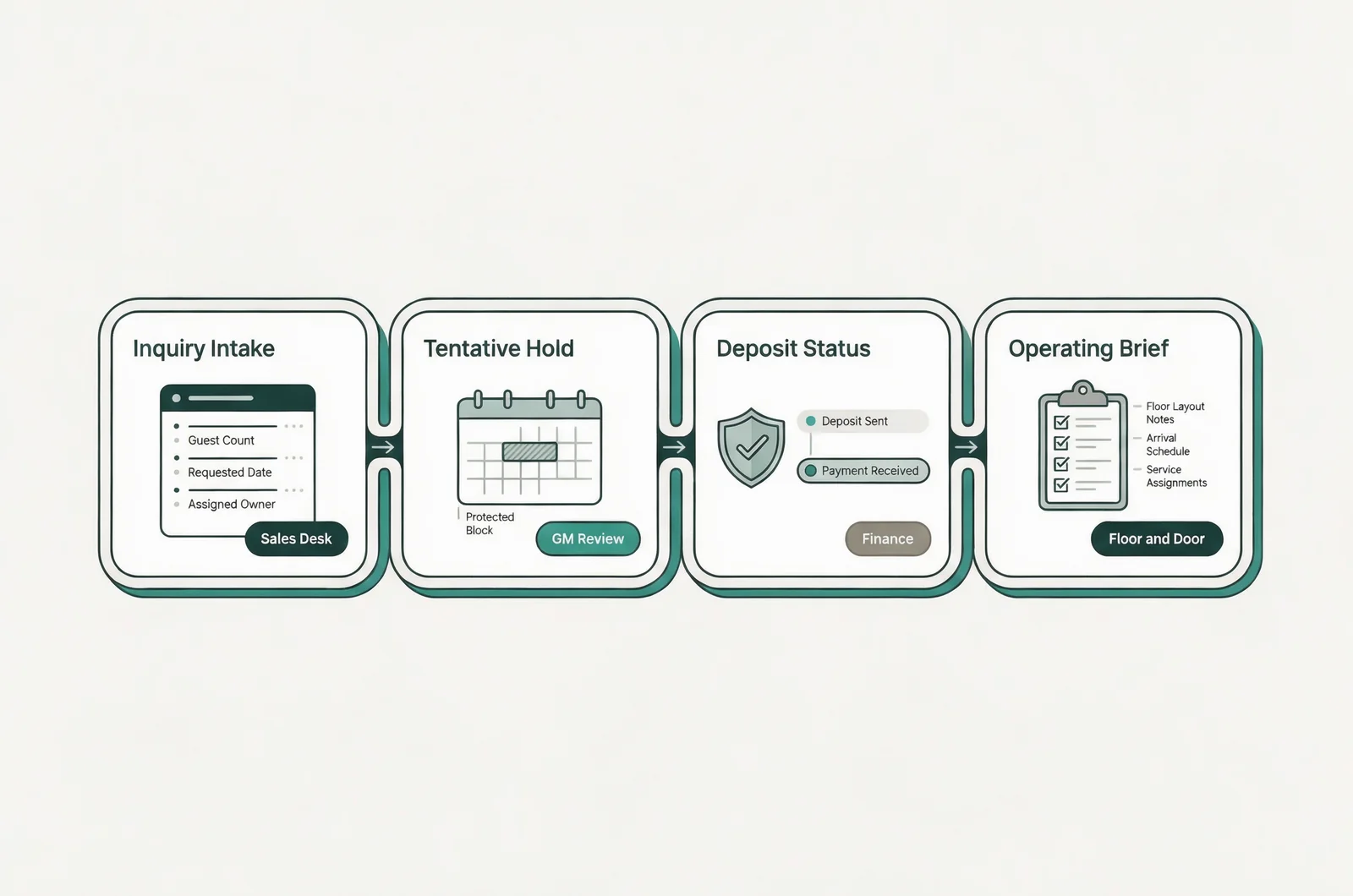
Email can remain part of the conversation. The operating requirement is that an agreement made in a message reaches the booking record. Otherwise, a revised arrival time can stay in a salesperson’s inbox while the floor team prepares for the original schedule.
VenueStack’s stated event venue management scope includes table bookings, deposits, guest lists, check-in, and reporting. Those functions provide a relevant example of connected operations. Individual venues still need to verify how their inquiry approvals, private-event holds, and agreement requirements fit the system.
The proposed change also creates a management responsibility: someone must define each status. An inquiry, a tentative hold, and a confirmed booking carry different commitments.
A record can be complete enough for a quote while still missing details required by the floor. The manager reviewing it needs to know which decision comes next and who owns that decision.
Online intake separates acknowledgment from an answer
Online intake changes the start of a private-event booking by placing the request into a defined queue. Its value depends on what happens after submission.
The first useful reply needs an owner
An acknowledgment tells the organizer that the request arrived. A substantive reply addresses the event itself: whether the proposed date is available, what information remains missing, or when a checked proposal will follow.
These are different response milestones. Combining them into one response-time figure can make an unattended inquiry appear resolved.
Ownership needs to survive shift changes and days off. If the reservations manager leaves while a quote awaits approval, another person needs access to the request and permission to move it forward.
A venue considering reservation widget setup should therefore settle the destination and owner of each submission alongside the website installation. The form is only the entry point.
Shorter forms move work into the follow-up
An intake form needs enough information to direct the request without asking the organizer to design the entire event.
The proposed date, timing, approximate attendance, event format, and contact details give staff a starting point. More detailed requirements can follow once someone has checked the request.
Say a lounge receives an inquiry for an 80-person corporate reception from 7 p.m. to 10 p.m. That is an illustration, not a reported booking. The headcount and schedule let the manager begin assessing the room. They do not settle furniture layout, arrival arrangements, or access for setup.
A shorter form leaves those questions for the conversation. Assign that follow-up before marking the inquiry ready for a final quote.
A digital hold still needs a room decision
Private-event holds affect what the venue can sell elsewhere. Moving the hold onto a screen makes it visible, but the team still has to define what space and time it protects.
The event clock extends beyond guest arrival
For the hypothetical lounge reception, the guest-facing schedule runs from 7 p.m. to 10 p.m. The room may also need preparation and clearing time.
A calendar showing only guest hours can leave staff with overlapping promises. A table booking before the reception or public admission immediately afterward may use the same space during preparation or clearing.
The hold should identify the affected room or tables and the full operating window. If the reception occupies part of the venue, the remaining inventory needs an explicit decision.
An inquiry for 80 people does not establish that a particular layout or shared operating plan is suitable.
Expiry needs a person behind it
A tentative hold requires an expiry time and a named person who can extend or release it. Otherwise, staff cannot tell whether another organizer can receive a firm offer.
Quote preparation also depends on the event format. Questions about exclusive use, service, and timing belong in the commercial review; private event quoting questions provide a focused place to examine those assumptions.
Automation can send a reminder when a deadline approaches. The venue must decide what the deadline means for availability and communicate that meaning to the organizer.
Deposit requests change the meaning of confirmed
Digital payment requests connect money to the booking record. The operational consequence is a clearer distinction between requesting a deposit, receiving payment, and confirming the event.
Payment status needs its own detail
A deposit request can be sent while payment remains outstanding. A payment attempt can also require further attention before staff treat it as received.
Those states need to remain visible to the booking owner. Staff working through digital deposit requests should be able to identify the relevant reservation, amount requested, and current payment status.
The venue then needs a confirmation rule. Depending on its process, confirmation may require an accepted agreement, payment, and approval of the event’s operating requirements.
That rule should appear in staff instructions. A team member looking at the calendar should know what the confirmed status represents.
There is no verified evidence here that sending payment links, by itself, reduces cancellations or increases corporate bookings. Those outcomes require venue-level measurement.
Terms need to stay attached to the booking
The organizer needs clear information about what the deposit secures, how it applies to the event, and which agreed conditions govern changes or cancellation.
These details deserve a separate review from the payment link. The event deposit policy is part of the booking process because staff need consistent terms when they explain the request.
A revised event can require another review. If the organizer changes the space, timing, or attendance, the booking owner needs to check whether the existing amount and agreement still match the event.
Keep the accepted version with the booking. The person answering the organizer’s next question needs access to the same terms.
The booking handoff reaches the door and floor
A private-event booking becomes an operating commitment when the service team receives the details it needs to deliver it.
Sales correspondence can contain much more information than the door or floor needs during service. The handoff should extract the current instructions: the organizer’s contact, arrival arrangements, assigned space, expected attendance, and any approved changes that affect delivery.
For a venue using VenueStack’s table bookings and guest lists, the practical review is how private-party details reach the people assigning tables and admitting guests. Check that path against the venue’s actual staffing arrangements.
A recorded deposit also needs a clear explanation for the service team. Staff must understand how it relates to the remaining balance and avoid making assumptions about what has already been covered.
In the hypothetical reception, the floor manager needs the agreed layout and service timing. The door team needs the admission arrangement and an escalation contact.
Later changes need a visible update and acknowledgment from the affected team. Set a final review point before service, then assign responsibility for changes received after it.
Conversion evidence has to catch up with automation
Booking automation needs outcome measures alongside activity measures. A shorter acknowledgment time tells an operator very little about whether suitable inquiries became confirmed events.
Measure the stages separately
A useful review distinguishes receipt of the inquiry from the first substantive reply. It also records when the quote went out, when the deposit was requested, and when the venue confirmed the booking.
Those timestamps show where work waits. A fast first reply followed by a long approval delay points to a different problem from an inquiry that receives no substantive answer.
Compare similar requests. A standard table package and a full-venue corporate buyout can require different amounts of review.
Payment needs the same discipline. Track the interval between a deposit request and receipt, then examine the unpaid requests individually. Some may involve an organizer’s approval process; others may reflect an unresolved question about the event.
A small inquiry-aging calculator could use receipt time, substantive reply time, hold expiry, and payment status to flag bookings that need attention.
Lost inquiries need recorded reasons
A lost booking does not, by itself, prove that the venue replied too slowly. Price, availability, event fit, and a changed plan can all affect the organizer’s decision.
Record a reason when it is known. Leave the reason unknown when the organizer gives none. Assigning every unanswered follow-up to slow response would create a misleading performance report.
Booked revenue also needs a defined basis. A quoted amount, a received deposit, and final event revenue describe different stages.
Keep those figures separate when reviewing the effect of a workflow change. Compare the same event categories over comparable periods, and retain unanswered inquiries in the count.
Questions the booking desk still needs answered
The practical questions around connected booking concern who can make a commitment and which information supports it.
Can the venue automate its first reply?
Yes, a venue can use an automatic acknowledgment if its chosen tools support one. The message should accurately describe what has happened and when a person will respond.
Availability, pricing, and confirmation promises require dependable information and approved rules. Keep staff review wherever those conditions remain unresolved.
When should a hold become confirmed?
The venue needs a written rule that staff can apply consistently. The rule should identify the required agreement, payment status, and operating approvals.
If an exception is allowed, record who approved it and what remains outstanding. That lets another manager understand the commitment without reconstructing the conversation.
What happens when the organizer changes the headcount?
The booking owner should review the effects on space, service, and the agreed commercial terms. The floor team then needs the approved attendance figure and any revised instructions.
Preserve the earlier agreement alongside the change record. Staff need to distinguish the original request from the version the venue has accepted.
These questions belong in the operational review of a new booking process. Resolve them before relying on automated status changes.
What would show the change is working
Evidence of a better private-event booking process would connect faster handling with completed commitments and reliable service handoffs.
For an individual venue, useful signals include fewer inquiries without an owner, fewer unresolved holds past their deadlines, and fewer bookings that reach service with missing instructions. Each signal needs a defined count and review period.
Confirmation speed deserves a closer look, too. Check whether staff completed the required decisions earlier or simply changed the status sooner. Review a sample of records against the information the operating team actually received.
Broader claims about industry adoption need dated, attributable evidence. Claims that faster replies prevent corporate booking losses need data that distinguishes response time from availability, price, and event fit.
Until that evidence is available, operators can assess the changes against their own records. Select a comparable group of private-event inquiries and follow each through to confirmation, loss, or an explicitly unresolved status. Record the date and reason for every status change.