Useful promoter ticket allocation tracking methods connect each promoter’s sales to a defined allotment, a payment record, and the door count. For a nightclub, beach club, or festival, that means keeping separate records of what promoters can sell, what guests bought, and who arrived. Those records let the venue adjust inventory during the sale and settle commissions afterward without rebuilding the night from screenshots and messages.
Which promoter tracking method should a venue use?
Use a unique tracking link or promoter code to attribute sales, then connect that attribution to controlled ticket inventory and a settlement record.
Each method answers a different operational question. A link identifies a sales source. An allocation cap limits inventory. A check-in record confirms that a ticket was used. Combining them gives the venue a fuller picture than any single count.
| Method | How sales are attributed | How inventory is controlled | Useful application |
|---|---|---|---|
| Unique tracking link | Promoter identifier saved with the purchase | Requires a separate inventory rule | Online sales through promoter campaigns |
| Promoter code | Code entered and retained on the order | Requires a configured usage limit or inventory rule | Sales where guests move between devices |
| Dedicated ticket type | Purchase recorded against a promoter-specific category | Quantity limited for that category | Separate allotments, prices, or admission terms |
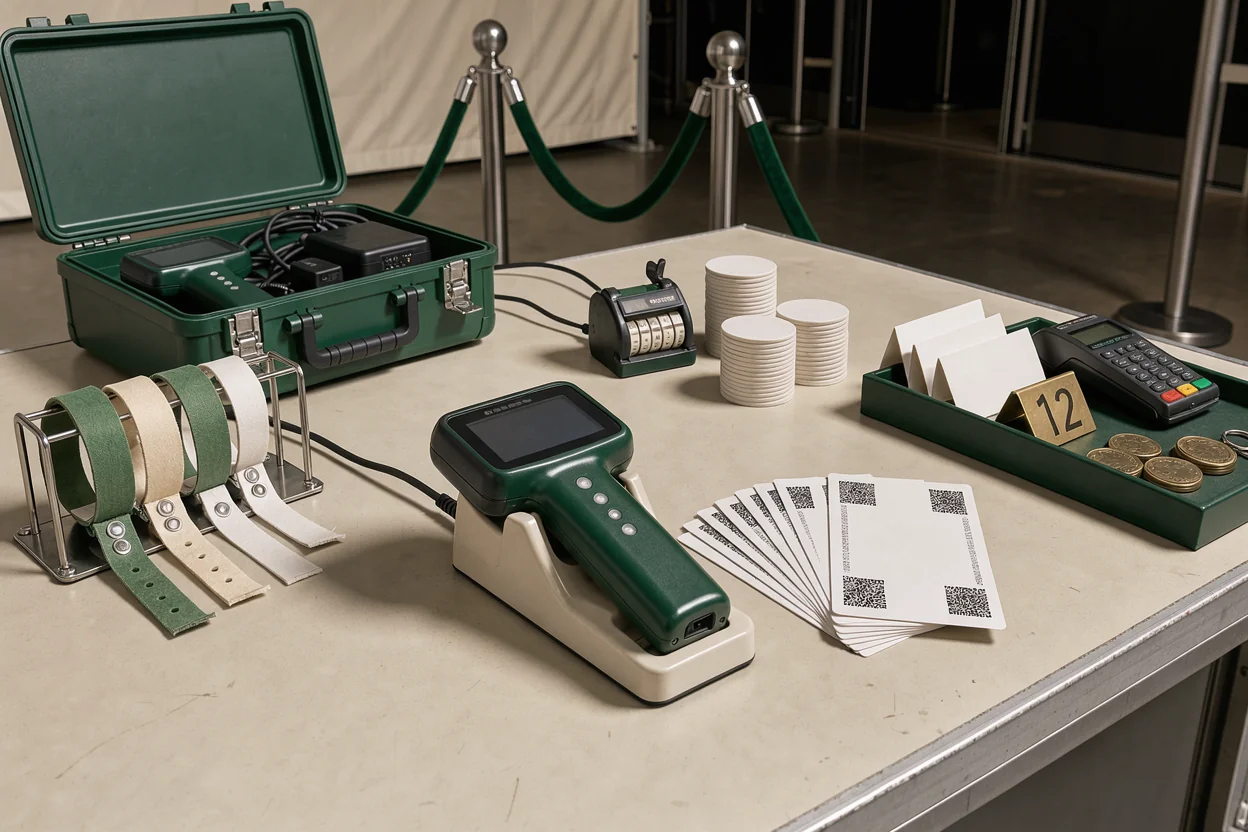
| Manual allocation ledger | Staff record the promoter against each transaction | Staff update issued and available quantities | Cash sales and numbered paper tickets |
A discount code only works for attribution if the purchase record retains it. Likewise, a tracking link does not automatically reserve tickets or prevent overselling.
Choose the smallest combination that covers attribution, inventory, and settlement. Before distribution, complete a sample purchase, find its promoter identifier, and confirm that the available ticket count changes correctly.
What should each promoter allocation record contain?
Each promoter allocation record should identify the event, the promoter, the permitted inventory, and the payment terms.
Use a stable promoter ID across orders and reports. Names alone become awkward when a promoter uses a nickname or works with several team members. Assign an event-specific allocation ID so the same promoter’s Saturday sales stay separate from Friday’s.
Keep these fields in the allocation record:
- Event ID, date, promoter ID, and responsible venue manager.
- Ticket category, admission conditions, and approved selling price.
- Original allocation, approved increases, and returned inventory.
- Paid tickets, complimentary tickets, refunds, and voids.
- Remaining sellable quantity and allocation expiry time.
- Commission basis, rate, exclusions, and settlement date.
- Change history with the person, timestamp, and reason.
Count tickets separately from orders. One buyer purchasing four tickets creates one order and four admission entitlements. A commission paid per ticket needs that distinction.
Keep allocation changes separate from sales changes, too. Raising a cap creates more selling room; it does not create revenue.
Give promoters a clear statement of their own allocation and activity. Keep the full event inventory under a named venue owner, and restrict editing of prices, caps, and settlement terms to authorized staff.
How do you cap allocations without overselling the event?
Set the event’s available admission inventory first, then divide that inventory among promoter allotments, public sales, tables, comps, and door sales.
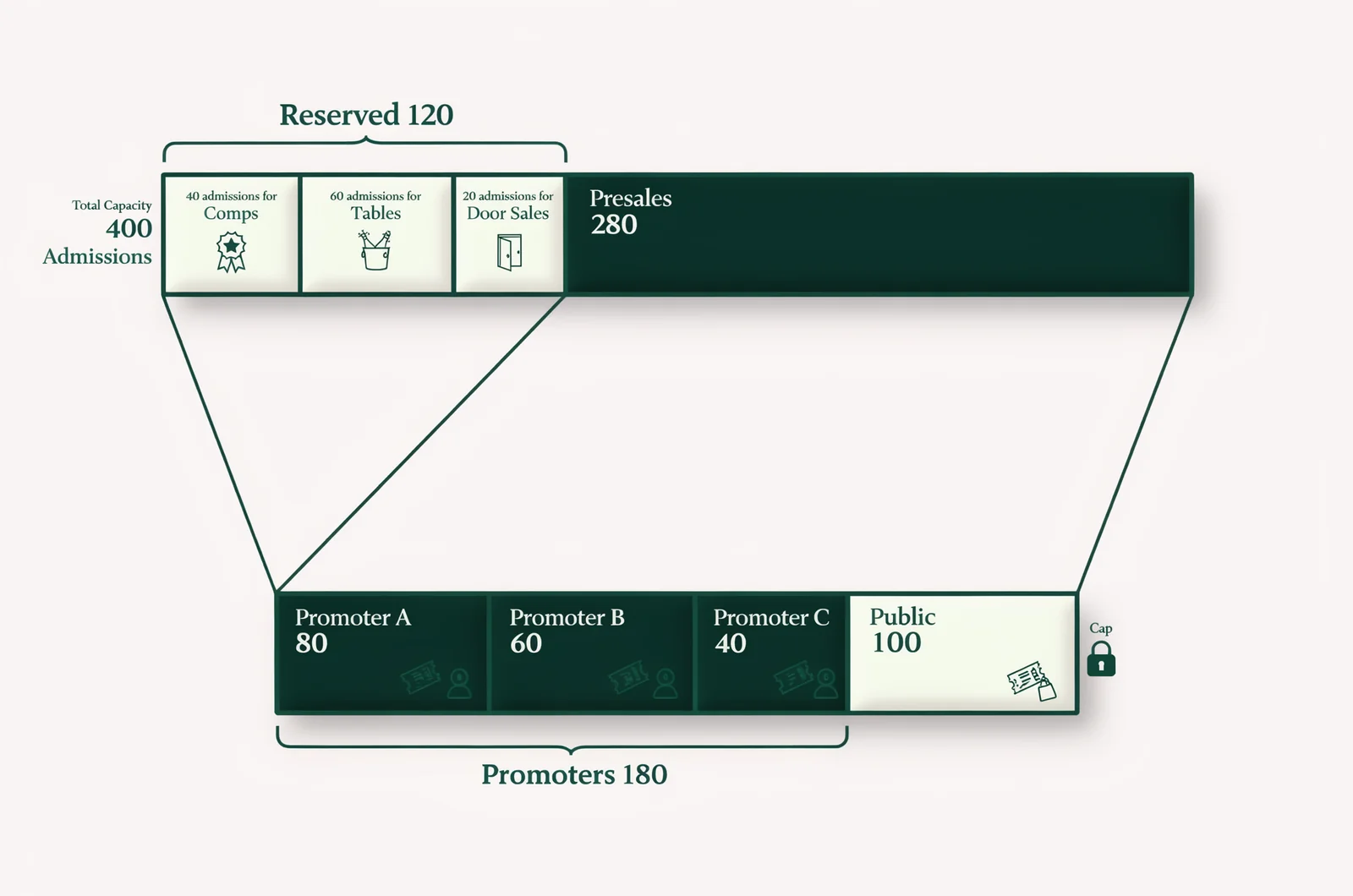
Consider a hypothetical club night with an approved guest-admission limit of 400. The venue reserves:
- 40 admissions for complimentary guests.
- 60 admissions for table guests.
- 20 admissions for door sales.
That leaves 280 admissions for promoter and public presales. Promoter A receives 80, Promoter B receives 60, and Promoter C receives 40. Their combined allocation is 180, leaving 100 for public presales.
Every admission entitlement must fit within that plan. Decide whether table guests receive separate admission tickets or enter through the table reservation record, and count each guest once.
For a venue using VenueStack, the guidance on dedicated ticket types provides a starting point for structuring inventory. Confirm how your configuration handles the overall event limit before distributing promoter allotments.
Choose whether an allotment reserves stock exclusively or merely limits a promoter’s access to a shared pool. Tell promoters which arrangement applies.
When reclaiming unsold stock, reduce the old allotment before adding those tickets elsewhere. Record the quantity and timestamp. An unused allocation can return to sale; a valid sold ticket remains an admission commitment even if its buyer has not arrived.
How do tracking links and codes assign sales fairly?
Attach the promoter identifier to the completed purchase, using a written attribution rule that staff can apply consistently.
Give each promoter an event-specific link or code. Keep a register of those identifiers and check that they lead to the intended event and ticket category. The guidance on promoter tracking links is a useful starting point for link setup.
Agree on what happens when a guest encounters several promoters. Possible rules include crediting the code entered at checkout or the eligible tracking link retained by the purchase system. Select a rule your records can support, and test it.
The operating agreement should also explain whether:
- A manually entered code takes priority over a stored link identifier.
- A shared code still credits its original promoter.
- Staff can correct missing attribution after purchase.
- Refunds and exchanges retain the original sales source.
Clicks and completed sales belong in separate columns. A campaign can attract visitors who never buy.
Preserve attribution when tickets are transferred to another guest. Changing the attendee name should not automatically change who receives sales credit.
For corrections, retain the original value, the replacement value, the approving manager, and the reason. Set a deadline for attribution disputes so promoter credit is resolved before the settlement statement closes.
What should the team monitor while tickets are selling?
Monitor each promoter’s valid paid tickets, remaining allocation, sales pace, refunds, and event-wide inventory together.
A promoter selling quickly may need more stock. A promoter holding unused inventory near the release deadline may need a smaller allocation. Both decisions depend on what remains available across the whole event.
Use sales and events data alongside the allocation ledger, and keep the reporting units consistent. A report counting orders cannot be compared directly with a cap measured in tickets.
A working view should show:
- Current allocation and approved changes.
- Paid ticket count, with refunded and voided tickets separated.
- Complimentary tickets attributed to that promoter.
- Remaining sellable tickets under the chosen inventory rules.
- Ticket revenue and the proposed commission basis.
- Last update time and unresolved exceptions.
Set review times around decisions: before a price change, at the allocation release deadline, and before doors open. Add reviews when sales activity justifies them.
Include a last-updated timestamp. When reports refresh periodically, staff need to know how old the figures are before transferring inventory.
Keep pending payments separate from confirmed purchases, and document whether they temporarily hold stock. Make cap changes in the system that controls sales, then update any supporting ledger. Assign one manager to approve reallocations.
How should the door handle promoter tickets, comps, and tables?
Validate each guest’s admission entitlement at the door while preserving the original promoter attribution.
Door staff need the ticket’s validity, admission conditions, and previous scan status. Commission discussions belong with the manager responsible for settlement. A guest should not wait while two promoters debate sales credit.
Keep the door check-in process consistent across entrances. When staff admit someone manually, record the ticket or reservation ID, time, staff member, and reason for the override.
Separate these categories in reporting:
- Paid promoter tickets.
- Promoter complimentary admissions.
- Table guests whose admission is included.
- Guests paying at the door.
- Re-entry by guests already admitted.
For teams using VenueStack’s ticketing and table-booking records, decide which record establishes each guest’s admission. A table deposit is a payment toward a booking; it does not establish how many separate admission tickets should be counted.
Keep current occupancy separate from cumulative check-ins. Re-entry can create additional scan activity without representing another unique guest.
A paid guest who does not arrive remains a no-show in attendance reporting. Whether that ticket earns commission depends on the agreed payment basis.
If staff use an offline list during an outage, reconcile those admissions before closing attendance figures. Preserve duplicate-scan exceptions for review, and never convert raw scan attempts directly into payable attendance.
What changes if promoters collect cash or use paper tickets?
Track physical ticket custody and cash collection alongside the admission inventory, with an identified person responsible for every handoff.
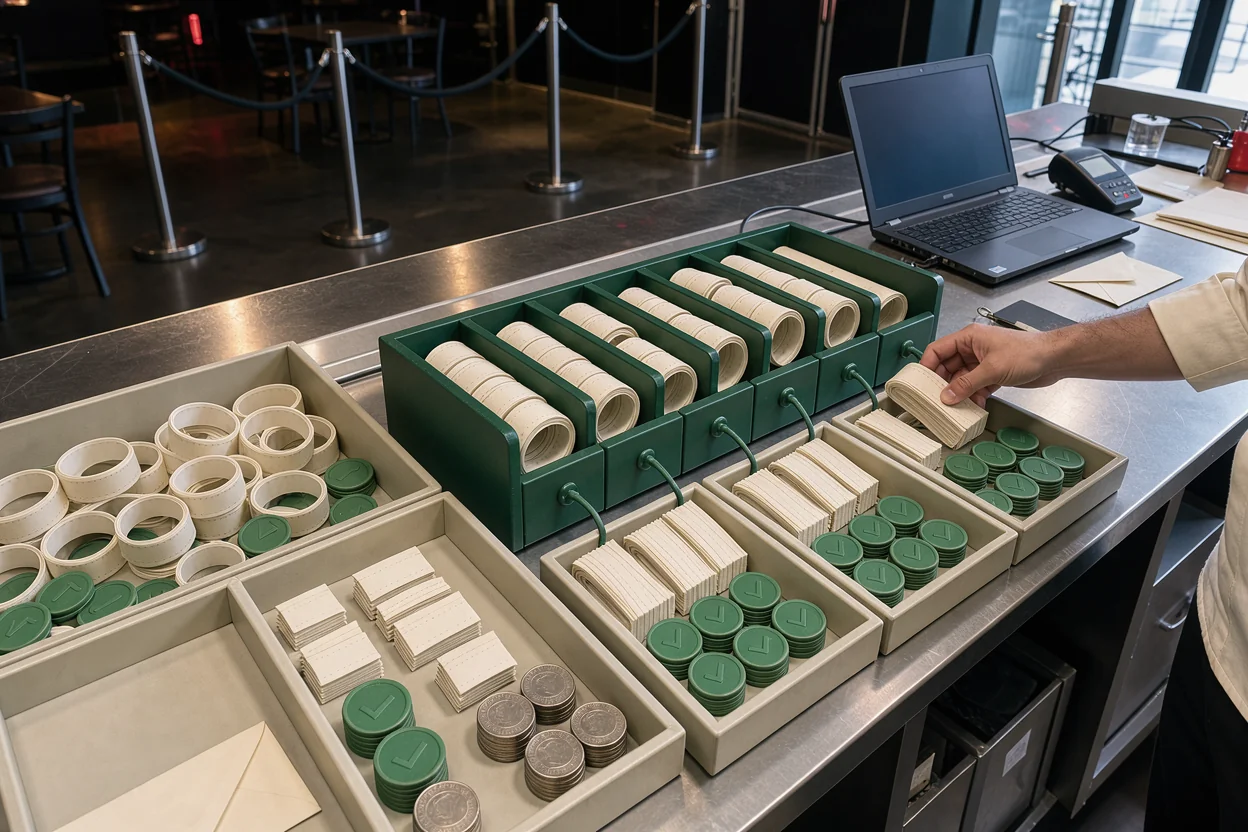
For paper tickets, assign a numbered range to each promoter and record which numbers were issued, sold, returned, or voided. Keep the physical tickets tied to the same event and promoter IDs used in the master ledger.
A returned ticket must be checked before its inventory becomes available again. Record damaged or missing tickets separately, and decide how the door will recognize invalid numbers.
For cash sales, capture the ticket number, selling price, payment status, and collection status. Distinguish money a guest paid to a promoter from money the venue has received.
Use a signed or otherwise acknowledged handoff record when cash or unsold tickets change hands. The record should identify the event, quantities, amount, date, and both parties.
Decide in advance whether promoters remit gross receipts and receive commission separately, or retain an agreed commission from collections. Show gross sales, commission, and cash due as separate amounts under either arrangement.
Do not mark an unexplained shortage as a refund or a complimentary admission just to balance the sheet. Keep it as an open exception assigned to a manager. Close each issued ticket number to a documented status before approving the promoter’s final settlement.
How do you calculate promoter commissions?
Calculate promoter commissions from the agreed eligible sales or attendance basis, after applying the exclusions specified before sales began.
Define whether commission is a percentage of eligible ticket revenue, a flat amount per eligible ticket, or an amount per verified admission. State how discounts, refunds, comps, taxes, fees, exchanges, and disputed payments affect that basis.
Continue the hypothetical club-night example. Promoter A sells 70 tickets at $25 each. Four receive full refunds.
The calculation is:
- Gross ticket value: 70 × $25 = $1,750.
- Refunded ticket value: 4 × $25 = $100.
- Eligible ticket revenue: $1,750 − $100 = $1,650.
- Commission at an agreed 10%: $165.
This illustration assumes the agreement pays on retained ticket revenue, with no other adjustments. It is a worked example, not a suggested market rate.
If 58 of the remaining 66 ticket holders check in, an attendance-based agreement uses 58 eligible admissions. A sales-based agreement uses the eligible sales basis defined in its terms.
For partial refunds, percentage commissions can follow the remaining eligible ticket value. Flat per-ticket agreements need an explicit rule for partially refunded tickets.
Show any tier thresholds and rounding rules in the statement. Agree how later refunds or chargebacks will be handled, and record later adjustments against the original event rather than silently rewriting an approved payout.
How do you reconcile discrepancies and close the event?
Match each promoter’s allocation, ticket transactions, payment activity, and attendance records before approving the settlement statement.
Begin with a dated export or snapshot, then compare the ticket sales report with the allocation ledger. Identify whether a mismatch concerns ticket quantities, collected money, attribution, or check-ins.
Investigate exceptions at ticket or order level. Typical questions include whether an exchange produced a replacement ticket, a refund returned inventory to sale, or a manual admission missed its attendance record.
Keep exchanges linked so the original and replacement ticket cannot both count as valid admissions. If a refund does not automatically restore inventory, record the release separately.
The final promoter statement should show the opening allocation, changes, valid paid tickets, comps, refunds, eligible revenue, commission calculation, money already held, and remaining payment due. Record unresolved items separately with an owner and review date.
A useful settlement calculator would accept eligible sales, refunds, commission terms, and cash already collected. It would calculate the proposed balance and flag missing terms or inconsistent counts for review.
Set a clear reporting cutoff and give the promoter a defined review window. After approval, retain the statement and its supporting records. Apply subsequent corrections through a dated adjustment entry tied to the original settlement, with the reason and approving manager recorded.