
For venue operators, balancing ticket inventory against table reservations becomes a different decision when both products draw from one admission allowance. A general admission (GA) ticket commits one place. A table package may commit several. Under a pooled model, both affect how much inventory remains available for the event.
As of November 22, 2026, the evidence available for this update does not establish an industry-wide shift toward that model. There is no verified, dated operator rollout or vendor announcement to support a claim about adoption across clubs, festivals, or beach clubs. The implications below are analysis, with hypothetical examples identified.
The operating question is still concrete: when a table is sold, held, changed, or canceled, what happens to the remaining admissions? That relationship determines whether the ticket count reflects commitments across the whole event.
What pooling changes in the admission count
Pooled capacity connects products through the number of guests they permit to attend. The products can retain different prices, booking conditions, arrival windows, and service arrangements.
For an event selling tickets and tables together, that means a table needs two kinds of inventory. It occupies a physical table and reserves an admission allowance. Selling the table changes both records.
A booking for six guests might therefore consume one table and six event admissions. The package description determines whether those guests also need separate entry tickets. Counting depends on that entitlement.
The distinction matters because a booking count cannot stand in for a guest count. Ten reservations could represent very different attendance totals depending on party sizes and package limits. A shared balance needs a defined relationship between each product and the people it admits.
Pooling also leaves room for protected allocations. An operator can reserve admissions for tables, promoters, guest lists, or later sales while retaining one event-wide total. Those allocations describe where capacity is committed and who can release it.
This creates two useful views of availability. The event may have uncommitted admissions overall while a particular sales channel has none available. Conversely, an unsold table can remain protected even when its physical seats are empty.
The number beside “available” therefore needs a definition: available to which channel, for which guests, and during which period?
Analysis: GA availability becomes a timing decision
A pooled model makes the timing of table allocations visible in the ticket balance. Protecting admissions for a table limits what can be sold elsewhere until that protection expires or someone releases it.
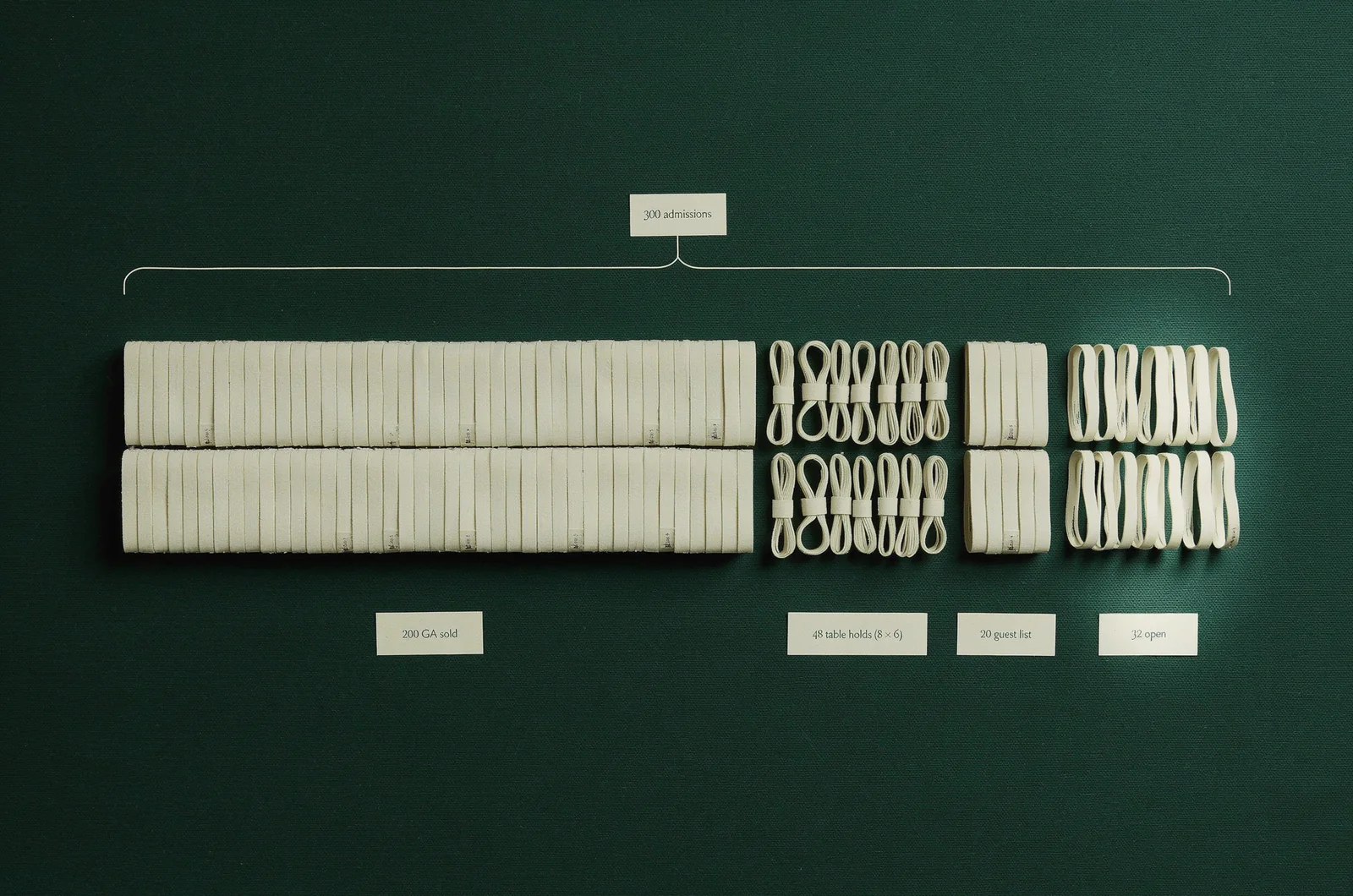
A hypothetical 300-admission event
Assume an event has 300 guest admissions to allocate. The operator has:
- Sold 200 GA tickets.
- Protected eight table packages for six guests each.
- Held 20 admissions for a guest list.
The protected table allocation accounts for 48 admissions. Together, the three commitments total 268, which leaves 32 admissions uncommitted.
If two unsold table packages are released, another 12 admissions become available. The operator could then make 44 GA tickets available while keeping six table packages protected.
That release changes the sales mix. It does not increase the event’s total admission allowance.
A table sale within the protected allocation also needs consistent treatment. If six admissions were already reserved for that package, confirming the booking converts a hold into a sale. Subtracting another six from the uncommitted balance would count the same commitment twice.
These are illustrative figures, not venue results. They show why the relationship among protected, sold, and available inventory matters more than the headline number of bookings.
The commercial trade-off happens before the table sells
For events with tickets and table bookings, protected table inventory carries an opportunity cost. Those admissions remain unavailable to GA buyers during the hold.
Whether that protection pays depends on demand, timing, and the value of the eventual booking. A table could produce more contribution through admission charges and food or beverage purchases. It could also remain unsold after the strongest ticket-buying window has passed.
A pooled model makes that trade-off measurable. It does not determine the best allocation by itself.
The useful comparison is between the expected contribution from keeping a table allocation and the expected contribution from releasing its admissions. Gross package value alone leaves out service costs, inclusions, and uncertainty.
A simple allocation calculator could make this decision clearer. It would accept the event allowance, sold admissions, protected table places, and other holds, then show how a proposed release changes GA availability. Any revenue estimate would need separately entered assumptions.
Clubs, festivals, and beach clubs face different trade-offs
Shared admissions affect each venue format differently because a table, a festival package, and a beach club booking can reserve different resources. The following are hypothetical operating scenarios, rather than reports of named businesses changing their practices.
Nightclubs must account for included entry
Consider a club selling GA admission alongside table packages. The table customer may receive admission for a defined group, plus a reserved location and a spending commitment.
The capacity question begins with the package terms. Does the booking admit the whole group? Can guests arrive separately? What happens if a ticket holder later joins a table?
An upgrade needs to preserve one admission record for each person while changing the product attached to it. Otherwise, the sales report can show more admissions than the guest intends to use.
The allocation decision concerns how many places remain protected for future table demand at each sales stage.
Festivals need the correct event boundary
A festival package might combine event entry with access to a reserved hospitality area. Those permissions can draw from different inventory limits.
The operating distinction behind festival versus nightclub ticketing becomes relevant here. A festival-wide admission does not necessarily reserve a place in every restricted area, and an area upgrade may require an existing entry ticket.
A pooled model must specify which balance each product changes. Combining unrelated limits into one number could hide an area that is already fully allocated.
For a multiday event, the same question applies to dates. A package’s admissions need to match the days it permits the guest to attend.
Beach clubs must include booking duration
A beach club booking may reserve a bed, cabana, or table for a defined period. Its guest allowance and duration both affect what remains available.
Two bookings at different times could use the same physical resource. They could also overlap if the first group retains access after leaving its reserved area.
That makes beach club event pricing a separate decision from admission allocation. A higher spending requirement does not explain how long the booking reserves space.
For this model, the relevant inventory record needs a resource, a guest allowance, and a start and end time. The booking terms must explain when each entitlement ends.
A shared checkout still needs a shared admission rule
A combined booking page can simplify purchasing while leaving the underlying inventory relationship unresolved. The decisive behavior happens when a transaction changes the event’s remaining admission balance.
Package terms determine the count
For a team assessing VenueStack’s ticketing and table bookings, the useful question is specific: how would one completed table reservation change the admissions available for sale?
The answer depends on whether the package includes entry, requires separate tickets, or permits guests to be added later. A single “table booked” status cannot explain all three arrangements.
Party size also needs a defined meaning. A reservation might list four expected guests while permitting six. Those two unused allowances remain a possible future commitment until the operator’s terms or a confirmed change remove them.
The record should distinguish the expected attendance from the maximum admission entitlement attached to the booking.
Changes need a consistent effect across channels
Capacity pooling also depends on how amendments travel through the event’s sales channels. A canceled booking, an increased party size, and an expired hold each change availability differently.
The important record is the sequence: what changed, which admissions it affected, and when those places became available elsewhere.
A refund does not automatically explain the admission status. The guest might retain a valid entitlement, receive a replacement product, or cancel completely. Inventory needs to follow the resulting entitlement.
Physical location remains a separate constraint. Operators reviewing multi-room capacity tracking need to understand whether a booking draws from an event allowance, a room allowance, or both.
An event-wide balance can describe total commitments while still requiring separate controls for rooms and reserved areas. The applicable inventory record must retain those boundaries.
The records that would establish an operating change
Evidence of pooled capacity would need to show how ticket and table commitments affect the same balance. A combined sales total, product announcement, or unified checkout would establish only part of that relationship.
A credible operator account would identify the event, the previous allocation method, the new method, and the period covered. It would also explain which admissions and resources were included.
Revenue comparisons need matching units
An operating result should compare equivalent periods and products. Ticket receipts, table deposits, final table bills, and attendance each measure something different.
A deposit credited toward a final bill must be counted once when calculating total receipts. A table’s full advertised minimum also cannot substitute for the amount actually collected.
The same discipline applies to guest counts. Booked allowances, named guests, scanned arrivals, and people currently present answer different questions.
Teams reviewing VenueStack’s event reporting can frame their assessment around those distinctions. The useful reconciliation connects each booking’s admission entitlement with attendance and receipts for the same event.
A claim that pooling improved revenue would need comparable results and enough context to account for changes in demand, pricing, and event format.
Released holds need a visible timeline
The timing of inventory changes would help explain any result. A record could show when table allocations were protected, when they expired, and whether released admissions subsequently sold.
Without that sequence, a higher GA total does not reveal whether pooling contributed to the outcome. The event may simply have attracted stronger demand.
Useful measures would include admissions held for tables, admissions released, the time remaining before the event, and sales after release. Confirmed bookings should remain distinguishable from tentative holds throughout that timeline.
The next substantive development to watch is a dated operator example or documented product behavior that makes these relationships visible. An announcement would establish what a supplier says changed; event records would show how that change worked in practice.
Until those records are available, adoption speed and commercial results remain unverified. A supported claim would identify both the inventory mechanism and the period in which the reported result occurred.
Questions behind a shared admission balance
The unresolved questions concern what each reservation promises and when that promise changes. They matter whether admissions are allocated manually or through connected software.
Does a table always reduce available GA tickets?
A table reduces the shared balance when it commits admissions that would otherwise remain available to GA buyers. If those admissions were already protected for table sales, confirming the reservation changes their status from held to sold.
A table that requires separately purchased admission needs a different counting rule. Its booking should reserve the physical resource without automatically creating another set of entry entitlements.
Can a likely no-show be treated as available capacity?
An attendance forecast can estimate how many guests may arrive. It does not, by itself, remove the admission entitlement attached to a confirmed booking.
A release needs a defined basis, such as a cancellation or an applicable expiration condition. The booking record should show when that condition took effect.
Expected attendance and committed admissions should remain separate figures so staff can see both the forecast and the outstanding obligations.
Does a guest leaving create another ticket to sell?
A departure changes the number of people present. Whether it changes saleable inventory depends on the guest’s remaining entitlement, including any permitted re-entry.
This makes live occupancy and future commitments different balances. A guest who has not arrived yet can still hold a valid admission, while someone who has left may remain entitled to return.
Any release decision needs to account for the admissions that remain valid for that event or booking period.